
Iran Removes Ballistic Missile Range Limits, Raising Regional Tensions
Translated & summarized from Cursorinfo by baba
Iran's Islamic Revolutionary Guard Corps has lifted all range restrictions on its ballistic missiles following a directive from Supreme Leader Mojtaba Khamenei. This decision raises concerns about Iran's ability to strike targets at greater distances, potentially impacting regional security and U.S. and Israeli interests. The move comes amid ongoing tensions and follows reports of Iranian missile tests towards distant targets. The U.S. has previously expressed concerns about Iran's growing missile capabilities.
The story in 6 lines · by baba
- Iran's IRGC has removed all range restrictions on its ballistic missiles following an order from Supreme Leader Mojtaba Khamenei.
- The decision allows Iran to potentially strike targets at greater distances in response to threats from Israel and the U.S.
- Previously, Iran voluntarily limited its ballistic missile range to 2,000 kilometers, sufficient to reach Israel.
- U.S. Ambassador to Israel Mike Huckabee stated Iran's missile range increased to 4,100 kilometers, potentially reaching Europe.
- The IRGC spokesperson did not confirm if longer-range missiles have been developed or deployed.
- The IRGC emphasized demonstrating military capabilities in practice rather than through public statements.
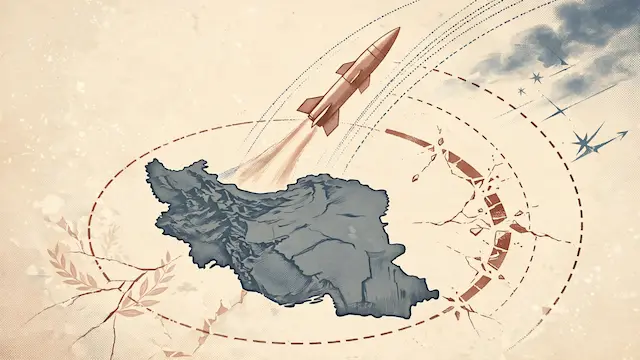
Iran's Islamic Revolutionary Guard Corps (IRGC) has announced the removal of all restrictions on the range of its ballistic missiles, following an order from Supreme Leader Mojtaba Khamenei to respond to threats without geographical limitations. This move significantly increases the potential for Iran to strike targets at greater distances, particularly in response to potential attacks from Israel and the United States. Previously, Iran had voluntarily limited its ballistic missile range to 2,000 kilometers, a distance sufficient to reach Israel and U.S. military installations across much of the Middle East. IRGC spokesperson Hossein Mohabbi stated that the previous range limitations are no longer in effect, though he did not specify if Iran has developed or deployed missiles capable of exceeding the 2,000-kilometer range. Mohabbi emphasized that the country's military capabilities should be demonstrated in practice. Advisor to the IRGC Aerospace Force commander, Ali Bilali, reiterated on Saturday that Iranian missiles have a range of approximately 2,000 kilometers and are capable of high-precision strikes. The issue of longer-range Iranian missiles gained prominence in March amid reports from U.S. and UK officials about two ballistic missile launches toward Diego Garcia, a U.S.-UK military base in the Indian Ocean, nearly 4,000 kilometers from Iran. UK Defense Secretary John Healey reported that one missile failed to reach its target and the other was intercepted, while Tehran denied involvement. Iran's missile program has been a key U.S. demand in negotiations regarding its military capabilities, though recent diplomatic efforts have focused primarily on its nuclear program. Missiles remain a crucial element of Iran's deterrence strategy, especially after recent military engagements that reportedly weakened its air defense and conventional forces. U.S. Ambassador to Israel Mike Huckabee previously stated that the range of Iranian ballistic missiles had increased from 2,000 to 4,100 kilometers in the past year, potentially enabling strikes on major European capitals like London, Berlin, and Brussels.
Mentioned
The same event, reported separately by each outlet. Open a few to compare what different newsrooms emphasize — and what they leave out.
Centre 3Right 2Haredi 1Other 1








Not the same event — other stories that share this one’s people, places, or theme: background, reactions, and follow-ups.
