
Rabbi Questions Disconnect Between Religious Revival and Election Results
Translated & summarized from Arutz Sheva by baba
Rabbi Meir Neeman noted a disconnect between a post-war religious revival and election results for religious parties. He questioned why increased religious observance did not translate into more votes for these parties. The Rabbi also called for unity among diverse segments of Israeli society, urging them to learn to live together by recognizing each group's contributions.
The story in 5 lines · by baba
- Rabbi Meir Neeman observed a gap between religious revival and votes for religious parties.
- He questioned why increased religious observance did not lead to more votes for religious parties.
- Rabbi Neeman noted reports of widespread religious awakening in schools post-war.
- He called for unity among different segments of Israeli society.
- The Rabbi suggested learning to live together by recognizing each group's contributions.
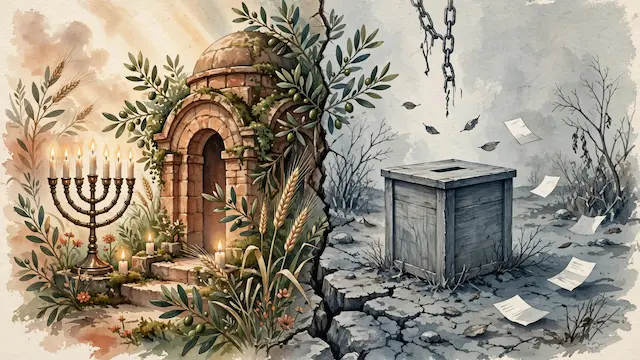
Rabbi Meir Neeman has commented on the recent election results, highlighting a perceived gap between a widespread religious awakening following the war and the actual voting patterns for religious parties. He observed that despite reports of increased religious observance in schools across various cities, this trend did not translate into a significant surge in votes for religious parties compared to previous elections. Rabbi Neeman questioned whether the religious awakening was not as widespread as believed, or if it simply did not lead to identification with existing religious political factions. He also pondered why secular individuals might not be embracing the religious lifestyle offered by the observant community, suggesting they might desire similar values but not see them reflected in the observant community's presentation. Furthermore, the Rabbi emphasized the growing necessity for unity among different segments of Israeli society, regardless of their differing worldviews. He argued that the traditional divisions, such as religious versus secular or right versus left, can no longer be the sole basis for public life. Rabbi Neeman called for learning to live together, suggesting that this unity does not require abandoning one's beliefs but rather finding ways to build a shared life by recognizing the unique strengths and contributions of each group within society.
Not the same event — other stories that share this one’s people, places, or theme: background, reactions, and follow-ups.
