
Trump Ends US Security Aid to Israel, Prompting Questions About Netanyahu's Role
Translated & summarized from Maariv by baba
Former U.S. President Donald Trump announced the end of annual security aid to Israel, claiming an agreement with Prime Minister Benjamin Netanyahu. This decision, worth billions, has sparked debate about whether Netanyahu traded a strategic asset for Trump's electoral support. The aid is seen as crucial for Israel's security and a symbol of the U.S. alliance, with the article questioning the wisdom of relying on personal political ties over stable state relations.
The story in 5 lines · by baba
- Donald Trump announced the end of U.S. security aid to Israel, a policy lasting over 50 years.
- Trump claims Prime Minister Benjamin Netanyahu initiated the agreement to end aid.
- The decision to end billions in annual aid raises questions about a political quid pro quo.
- The aid is described as a cornerstone of a strategic alliance, not just financial assistance.
- The article criticizes aligning Israel too closely with one U.S. political party.
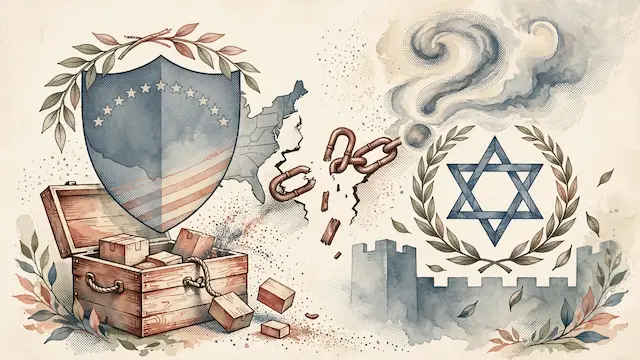
In a move that has surprised many, former U.S. President Donald Trump announced the cessation of annual American security aid to Israel, a policy that has been in place for over half a century. Trump stated that he and Israeli Prime Minister Benjamin Netanyahu had agreed to this decision months prior, with Trump claiming the initiative originated from Netanyahu. This announcement came shortly after Trump publicly endorsed Netanyahu during Israel's October 27 elections, a move the article suggests could be interpreted as foreign interference.
The decision to end the aid, reportedly totaling around $4 billion annually and set to continue until 2028 under a previous agreement, has raised significant questions. The article probes whether Netanyahu agreed to relinquish a strategic asset in exchange for Trump's personal political support during the Israeli elections. Trump himself explained the aid had become a political liability for the Republican Party, coinciding with the U.S. midterm elections.
While acknowledging Israel's economic strength and advanced technological capabilities, the author argues that the U.S. aid represents more than just a budgetary item. It signifies a broader strategic alliance encompassing intelligence sharing, access to advanced military technology, joint weapons development, diplomatic backing at the UN Security Council, and a U.S. commitment to Israel's security in the Middle East. This aid also benefits the U.S. economy through military equipment purchases, fostering joint development and employment.
The article contrasts Trump's action with the 2016 agreement signed by then-President Barack Obama, which secured $38 billion in aid over ten years. It criticizes Netanyahu's strategy of aligning Israel closely with Trump and the Republican Party, potentially alienating the Democratic Party, which has historically provided broad bipartisan support for Israel. The author suggests that basing a bilateral alliance on personal relationships between leaders, rather than on stable state-to-state ties, is a risky approach.
Ultimately, the article calls for transparency from Netanyahu, demanding answers regarding the specifics of his agreement with Trump, the timing, the approval process, the involvement of Israel's security establishment, and what Israel gained in return. The author emphasizes that the Israeli public deserves to know the details of a decision that could have profound implications for the nation's security.
Mentioned



