
Iran Bets on Trump's Defeat, Raising Stakes for Israel
Translated & summarized from Cursorinfo by baba
Iran is reportedly using the next 50 days to bolster its nuclear and missile programs, hoping to delay a potential U.S. strike until after the U.S. elections. Military observer Avi Ashkenazi warns this strategy could weaken Israel's ability to counter the Iranian threat. Iran is also engaging in negotiations with Qatar, seen by some as a tactic to postpone military action. Meanwhile, Israel faces internal political uncertainty and potential disruptions to its government transition, which could further complicate its diplomatic and military options against Iran.
The story in 6 lines · by baba
- Iran may use the next 50 days to advance its nuclear and missile programs, aiming to avoid a U.S. strike.
- Military observer Avi Ashkenazi warns Iran's strategy could limit Israel's ability to counter the Iranian threat.
- Iran's negotiations with Qatar are viewed by some as a tactic to postpone a potential U.S. military operation.
- The Iranian leadership reportedly hopes to wait for a change in U.S. political balance after the elections.
- Israel faces internal political uncertainty and potential disruptions to its government transition.
- Weakened Israeli diplomatic capabilities could reduce international support for actions against Iran.
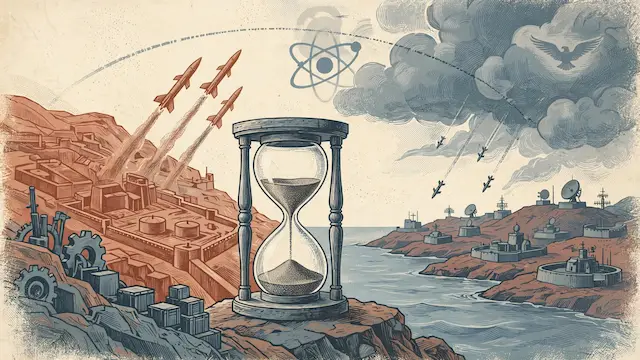
A potential 50-day delay in a U.S. strike against Iran could significantly alter the landscape of the confrontation with Israel. Iran may seek to avoid a new military strike by prolonging negotiations with the U.S. until the political situation in Washington changes. Israel is considering a scenario where Tehran uses the next 50 days to strengthen its positions by continuing to advance its nuclear and missile programs. Military observer Avi Ashkenazi warns that such a strategy could severely limit Israel's ability to counter the Iranian threat. Reports of negotiations between Iran and Qatar are drawing particular attention. According to assessments cited in the material, Tehran's readiness to use Qatari mediation might be a tactical maneuver to postpone a potential military operation rather than an attempt to reach a genuine agreement. The Iranian leadership reportedly hopes to wait for the new U.S. Congress to convene. It is assumed that a shift in the political balance after a Democratic victory would make it harder for President Donald Trump to decide on the use of military force. Therefore, the next 50 days could prove decisive for the future of the confrontation. If Tehran manages to avoid a strike during this period, the likelihood of a subsequent U.S. military operation could significantly decrease, according to the observer's assessment. Meanwhile, Iran continues to build up its ballistic missile stockpiles and advance its nuclear program. Despite previous military clashes, the Iranian regime has maintained its resilience and capacity to rebuild its military potential. Israel's weakened diplomatic capabilities also present a serious problem. Amidst an internal political crisis, the country risks losing its ability to influence decisions by the U.S. and European states regarding further actions against Tehran. Consequently, Israel might face a situation where the Iranian threat continues to grow, but international support for a potential military operation proves insufficient. Taking independent military action could also become a significantly more complex decision. Additional uncertainty is created by the change of power within Israel itself. Amid preparations for the first session of the 26th Knesset, concerns persist about potential attempts to disrupt the transfer of power. Ashkenazi points to reports of radical activists intending to prevent new lawmakers from attending the swearing-in ceremony. He compares such a development to the January 6th Capitol riots and urges police to prepare for possible clashes. The actions of the Shin Bet leadership also cause concern, with the observer suspecting politicization of the security service's activities. In his opinion, law enforcement agencies must remain independent of party interests and ensure the rule of law during periods of political change.
Mentioned


