
Israeli-Owned Companies in Russia Surge 2.5x Since Ukraine War
Translated & summarized from NEWSru Israel by baba
The number of companies in Russia with Israeli owners has surged to 520, a 2.5-fold increase since the start of the Ukraine war, according to The Marker. This growth, from 203 companies in late 2021, is attributed to factors including banking restrictions and opportunities arising from Western companies' exits. While official Israeli exports to Russia have declined, Israeli firms continue to operate, with some products potentially reaching Russia's defense sector, though companies deny direct supply.
The story in 7 lines · by baba
- 520 companies with Israeli owners operate in Russia, a 2.5x increase since the Ukraine war began.
- The number of active Israeli-linked companies grew from 203 in late 2021 to 520 by September 2026.
- Israeli entrepreneurs are reportedly using Russian financial structures and exploiting market gaps left by Western firms.
- Over $10 million in Israeli metalworking tools entered Russia in 2024, potentially for defense use.
- Israeli firms deny supplying Russia's military-industrial complex or controlling product distribution.
- Official Israeli exports to Russia have fallen from $794 million in 2021 to $470 million in 2024.
- Israel and Russia have not imposed sanctions on each other, according to the Israeli Ambassador.
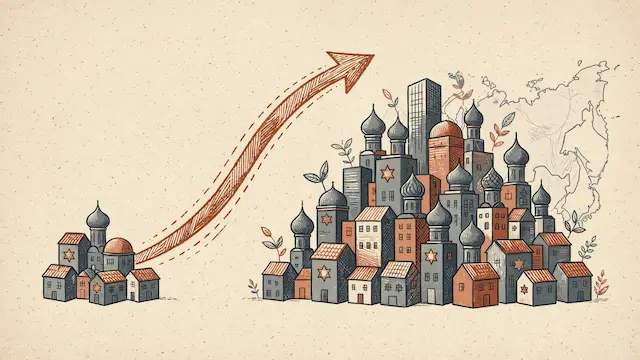
The number of companies operating in Russia with Israeli owners or legal entities has grown to 520, a 2.5-fold increase over five years, despite Western sanctions imposed after the invasion of Ukraine. This data, reported by The Marker citing Russian service Rusprofile, shows a significant rise from 203 companies with Israeli participation at the end of 2021, of which 148 were still active. By September 15, 2026, the number of active companies with Israeli founders reached 520, increasing their share among all Russian companies with foreign participation from 0.5% to 0.8%. These companies are primarily involved in wholesale trade, real estate, software development, and scientific research.
Evgeny Smirnov, Marketing Director of the Russian-Israeli Consulting Center, attributes this growth partly to restrictions in the Israeli banking system, making payments to countries like China and the UAE difficult. He suggests Russian financial structures offer alternative settlement options for Israeli entrepreneurs. Alex Tenzer, an Israeli expert on Russian-Israeli relations, offers a different perspective, believing Israeli entrepreneurs are capitalizing on opportunities created by the withdrawal of Western companies from Russia. He suggests they are acting as intermediaries in trade with third countries and circumventing sanctions.
A 2025 investigation by The Insider, based on customs data, revealed over $10 million worth of Israeli-made metalworking tools entered Russia in 2024, with some supplied via China and Uzbekistan. The report named Iscar, Vargus, Carmex, and Erojet as suppliers, suggesting their products were used by Russia's defense industry. Representatives of these Israeli firms stated they do not supply the Russian military-industrial complex or cannot control the distribution of their products through international dealer networks.
The presence of Israeli founders in a Russian company does not automatically imply sanctions violations, as international restrictions often include exceptions for items like medicines and medical equipment. Israeli pharmaceutical company Teva and coffee chain Cofix, with over 285 locations, continue to operate in Russia. However, official Israeli exports to Russia have decreased from $794 million in 2021 to $470 million in 2024. In October 2026, Israeli Ambassador to Moscow Oded Yosef confirmed that neither Israel nor Russia has imposed sanctions on each other. Public opinion in Russia regarding sanctions against Russia, as surveyed by Newsru.co.il in December 2025, showed 50% opposed and 30% in favor, a shift from 2024 figures.
Mentioned
The same event, reported separately by each outlet. Open a few to compare what different newsrooms emphasize — and what they leave out.
Other 2
