
West Bank Olive Harvest Season Sees Surge in Attacks
Translated & summarized from Al-Shams by baba
Palestinian authorities documented 674 attacks against olive farmers and their trees in the West Bank between October 1 and November 6, with settlers responsible for 520 and Israeli forces for 154. Nablus, Ramallah, and Salfit were the most targeted governorates. The attacks included intimidation, physical assault, and preventing access to land, resulting in one death and damage to nearly 3,000 trees. The commission reported a significant increase in violence compared to previous years and called for international intervention.
The story in 6 lines · by baba
- 674 attacks on West Bank olive farmers and trees were documented from Oct. 1 to Nov. 6.
- Settlers committed 520 attacks, while Israeli forces were responsible for 154 incidents.
- Nablus, Ramallah, and Salfit governorates suffered the highest number of attacks.
- Attacks included intimidation, physical assault, and preventing farmers from accessing their land.
- Nearly 3,000 olive trees were damaged, and one person was killed during the harvest.
- The number of attacks has significantly increased compared to previous olive harvest seasons.
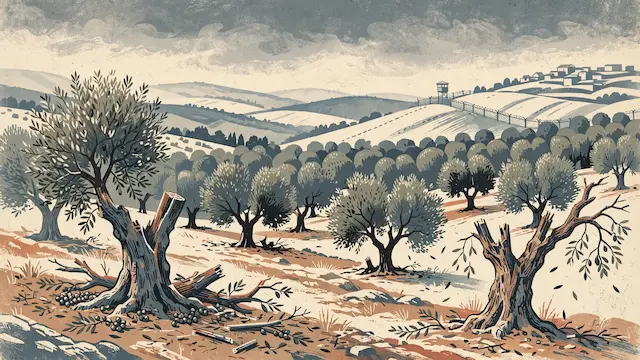
A Palestinian authority documented 674 attacks against olive farmers and their trees in the West Bank, including Jerusalem, between October 1 and November 6. The Wall and Settlement Resistance Commission reported that settlers carried out 520 of these incidents, while Israeli occupation forces were responsible for 154. Nablus governorate was the most affected region with 230 attacks, followed by Ramallah and al-Bireh with 130, and Salfit with 129. These three governorates accounted for approximately 72.6% of the total reported attacks. Other affected areas included Hebron with 87 incidents, Jenin with 41, Bethlehem with 30, Qalqilya with 24, and Jerusalem with three.
The attacks varied, including intimidation, physical assault, and preventing farmers from accessing their land. The commission recorded 249 instances of intimidation, 76 cases of physical assault, and 43 incidents of movement restrictions or denial of access. Other reported actions involved arrests, detentions, live fire, tear gas, and pepper spray. One citizen was killed from wounds sustained by settler gunfire while participating in olive harvesting, and solidarity activists and journalists accompanying farmers were also assaulted.
Damage extended to crops, trees, and agricultural equipment, with 91 reported thefts of olives, 37 thefts or confiscations of equipment, 20 instances of tree damage, and 18 cases of uprooting or cutting. Additionally, land and agricultural property were set ablaze, and fields were bulldozed. Approximately 2,974 olive trees were damaged, impacting not only the current season's yield but also long-term income sources.
The commission noted a significant increase in attacks compared to previous seasons, with 333 incidents in 2023, 407 in 2024, and over 441 in 2025. The current season's 674 attacks in just 37 days represent a nearly 102% rise from 2023 and a 66% increase from 2024. The authority highlighted that the escalating violence includes preventing farmers from reaching their land, releasing livestock into fields, stealing crops and equipment, and establishing settlement structures, alongside land leveling.
The commission stated that these practices, combined with Israeli occupation forces' restrictions, hinder farmers' access to their land and harvests, threatening agricultural activity and Palestinian families' livelihoods. It called for international intervention to protect farmers, ensure their safe access to fields, and hold those responsible for the attacks accountable.
Mentioned

