
Israel Reels From Record November Rains, Flooding and Power Outages
Translated & summarized from Vesty by baba
Record rainfall hit Israel on Saturday, November 7, causing widespread flooding, particularly in the HaSharon region, and significant damage in Gaza. Kadima recorded 117 mm of rain in just over an hour, leading to road closures and power outages in several areas. The severe weather is expected to continue with thunderstorms and cooler temperatures before subsiding by Sunday evening. In Gaza, tens of thousands of tents housing displaced people were flooded.
The story in 6 lines · by baba
- Record rainfall of 117 mm in just over an hour hit the HaSharon region on November 7.
- Heavy rains caused flooding, road closures on Highway Ayalon, and power outages in Gan Yavne.
- Tens of thousands of tents housing displaced people were flooded in the Gaza Strip.
- Temperatures are expected to drop below seasonal averages across Israel.
- Rain is forecast to continue in northern and central Israel through Sunday before stopping.
- The current rainfall is the most significant for November since 2020.
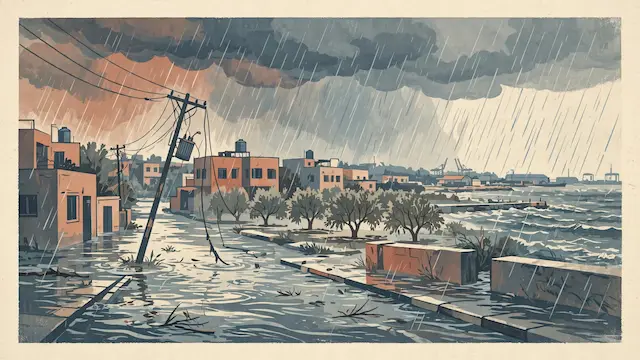
Heavy rains on Saturday, November 7, caused record precipitation in the HaSharon region, with the Kadima meteorological station recording 117 mm of rain in just over an hour. The authorities in Kadima-Zoran urged residents to stay home unless necessary. This period of rainfall is the most significant for November since 2020. Intense rainfall was also reported along the coast, with 48 mm in Binyamin and 35 mm each in Hadera and Tel Aviv. Ashdod received approximately 90 mm in the past 24 hours.
Keren Green, head of the Kadima-Zoran Local Council, stated that municipal and emergency crews are working to address the flooding. She noted the exceptionally high volume of rainfall in a short period. In Tel Aviv, two lanes of Highway Ayalon were closed northbound near the LaGuardia interchange due to a crack in the road surface. This damage was attributed to a failure in the drainage system and water seepage following the rains.
In Gan Yavne, power infrastructure was damaged on Friday, November 6, leading to electricity outages that affected neighboring communities. The Electric Company reported that several wires were downed by the severe weather, and repair teams are working to fix the damage. A resident of Gan Yavne, without power since Friday, expressed frustration over repeated delays in restoration and a lack of clear explanations, highlighting the impact on vulnerable populations including the elderly, sick, and families with young children.
Throughout Saturday, November 7, storms and thunderstorms were expected to continue across central and northern Israel, with localized showers in the northern Negev. The coastal plain faced a risk of localized flooding, while flash floods were possible in the Judean Desert and Dead Sea areas. Temperatures were forecast to drop below seasonal averages. On Sunday, November 8, localized rains were expected to continue in the north and center before gradually weakening and ceasing in the afternoon. No rain was forecast for Monday, November 9, though temperatures would remain cooler than normal.
The severe weather also caused significant damage in the Gaza Strip. Palestinian sources reported that tens of thousands of tents housing displaced people were flooded, with Hamas claiming approximately 70,000 tents were affected, primarily in the central part of the Strip.
Mentioned
The same event, reported separately by each outlet. Open a few to compare what different newsrooms emphasize — and what they leave out.
Centre 1Other 1

Not the same event — other stories that share this one’s people, places, or theme: background, reactions, and follow-ups.




