
US Offers $20 Million Reward for Iran Nuclear Program Secrets Amid Tensions
Translated & summarized from Alarab by baba
The United States is offering up to $20 million for information on Iran's nuclear program, citing Iran's non-compliance with IAEA safeguards. This comes amid heightened tensions and diplomatic efforts to prevent military conflict. Iran's military has warned of a decisive response to any new U.S. attack, threatening U.S. interests globally. Former President Donald Trump claimed U.S. actions destroyed Iran's nuclear program, preventing a regional catastrophe.
The story in 5 lines · by baba
- US offers up to $20 million for information on Iran's nuclear program, including facilities and personnel.
- Iran's military warns of a decisive and immediate response to any new U.S. military attack.
- Former President Donald Trump stated U.S. actions destroyed Iran's nuclear program, preventing regional war.
- Iran claims U.S. bases and interests outside the West Asia region are within range of its missiles.
- Diplomatic efforts to resolve the conflict between the U.S., Israel, and Iran remain stalled.
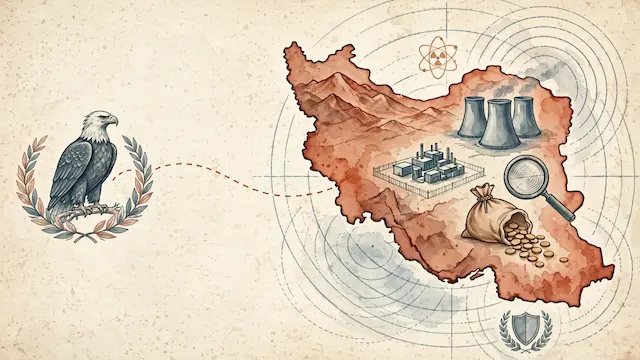
The United States announced on Friday a reward of up to $20 million, along with the possibility of alternative housing, for information regarding Iran's nuclear program. This move comes amid ongoing tensions between Washington and Tehran and diplomatic efforts to prevent renewed military confrontation. The U.S. Central Command stated that the State Department's "Rewards for Justice" program is offering the bounty for intelligence on Iran's nuclear facilities, equipment, and associated personnel, including those in scientific circles. The State Department noted that Iran's non-compliance with IAEA safeguards has led to a loss of "continuity of knowledge" regarding its production and stockpiles of key components, such as centrifuges.
In a related development, U.S. President Donald Trump reiterated his assertion that U.S. forces have effectively dismantled Iran's nuclear program, preventing Tehran from acquiring nuclear weapons. Trump stated that without U.S. intervention, Israel would not exist today and that Iran would have used nuclear weapons to devastate the Middle East. Despite acknowledging significant damage to Iran's economy and military capabilities, Trump suggested Tehran is eager to end the conflict and reach an agreement with Washington.
Conversely, the Iranian Army warned on Friday of a potential new U.S. military attack, despite reports of U.S. warships withdrawing from the region. Brigadier General Mohammad Akrami Nia, spokesperson for the Iranian Army, stated that the possibility of renewed U.S. military action cannot be ruled out, hinting that Washington might launch another offensive due to its own political difficulties. Akrami Nia emphasized that any new U.S. attack would face a decisive response from the Iranian armed forces, which must be immediate, effective, and without geographical restrictions, as per the directives of the Iranian Supreme Leader.
Akrami Nia further warned that U.S. bases and interests outside the West Asia and Gulf region are within range of Iranian missiles and drones and could be targeted in the event of a new attack. He also asserted that the Strait of Hormuz remains under Iranian strategic control and will not be reopened until Iranian conditions are met. The Iranian armed forces are on full alert to defend the country against any potential military action.
These developments occur amidst stalled diplomatic efforts to end the conflict between the U.S. and Israel on one side, and Iran on the other. The U.S. and Israel reportedly launched a military attack on Iran on February 28, followed by a ceasefire in April and an understanding in June aimed at a peace agreement, but no final settlement has been reached. The contrasting U.S. offer of a reward for information on Iran's nuclear program and Tehran's threats of retaliation highlight the persistent military and political tensions despite ongoing diplomatic initiatives.
Mentioned
The same event, reported separately by each outlet. Open a few to compare what different newsrooms emphasize — and what they leave out.
Centre 4Arab 1Other 1






Not the same event — other stories that share this one’s people, places, or theme: background, reactions, and follow-ups.
