
Qatar Proposes New Iran Deal: Strait of Hormuz Opening for Nuclear Oversight
Translated & summarized from N12 by baba
Qatar is mediating a new proposal to end the U.S.-Iran conflict, involving the reopening of the Strait of Hormuz and renewed nuclear inspections in exchange for lifting a naval blockade and releasing frozen assets. Iran also demands an end to the Lebanon war and sanctions relief. U.S. Vice President Jay-D Vance is also engaged in separate indirect talks, with both diplomatic and military options reportedly on the table.
The story in 6 lines · by baba
- Qatar proposes Iran-U.S. deal: Strait of Hormuz opening for nuclear oversight.
- Deal includes lifting U.S. naval blockade and releasing $8 billion in frozen Iranian assets.
- Iran demands end to Lebanon war, sanctions relief, and war reparations.
- Iran distrusts IAEA inspectors, fearing intelligence sharing with U.S. and Israel.
- U.S. Vice President Vance is also involved in separate indirect negotiations with Iran.
- U.S. military remains prepared to resume strikes if President Trump orders.
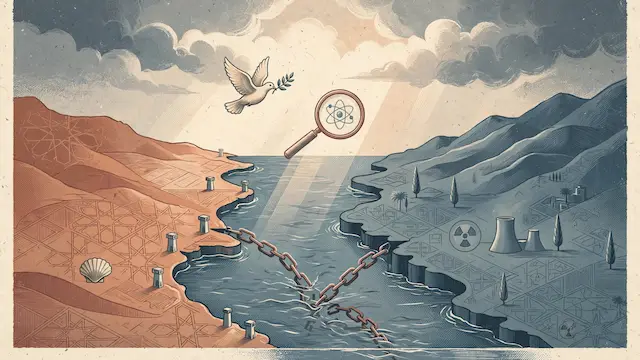
Qatar is reportedly promoting a new framework to end the conflict between the United States and Iran, centered on reopening the Strait of Hormuz and resuming international oversight of Iran's nuclear program. According to a report in The Guardian, the proposal includes the immediate lifting of the U.S. naval blockade and the release of some frozen Iranian assets. In return, Tehran would allow international inspectors access to nuclear facilities that have been targeted by strikes.
The proposed deal would see the U.S. first remove its naval blockade in the Strait of Hormuz and release approximately $8 billion in frozen Iranian assets. Iran, in turn, would permit inspectors from the International Atomic Energy Agency (IAEA) to visit nuclear sites, including those holding highly enriched uranium reserves. However, the plan does not obligate Iran to remove the uranium from its territory, though reducing enrichment levels is also being considered. The resumption of inspector visits would be based on a prior agreement reached in Cairo in September 2025.
On the second day of implementation, Iran would reopen the Strait of Hormuz to shipping traffic via a route agreed upon with Oman. Both countries would submit this arrangement to the International Maritime Organization (IMO). However, Iran has additional demands, including an end to the war in Lebanon, the withdrawal of U.S. forces from the Iranian coast, the lifting of some economic sanctions, and war reparations.
A significant obstacle is Iran's distrust of the IAEA, with Tehran accusing Director-General Rafael Grossi of not condemning U.S. attacks on nuclear facilities and fearing that information gathered by inspectors could be passed to the U.S. and Israel for further strikes. Meanwhile, U.S. President Donald Trump is reportedly still considering further strikes on Iranian nuclear facilities.
In parallel, Vice President Jay-D Vance has been personally involved in indirect negotiations with Iran over the past two weeks, aiming for a new ceasefire and to restart nuclear program talks. Sources indicate Vance has been in daily contact with Qatar's Prime Minister, Pakistan's Army Chief of Staff Asim Munir, and other mediators, with White House envoy Steve Witkoff and Jared Kushner also involved. While progress is described as slow, U.S. officials suggest Trump is allowing diplomatic efforts to continue, though the possibility of renewed hostilities remains, with the U.S. military prepared to resume strikes if ordered.
Mentioned

