
Wave of Bomb Threats Disrupts European Aviation
Translated & summarized from Ice by baba
Dozens of European flights received false bomb threats this week, leading to emergency landings, rerouted flights, and airport closures. The incidents peaked on Thursday, November 5, with at least 25 flights targeted. The perpetrators remain unknown, raising concerns about coordinated psychological warfare. The disruptions have caused significant economic and operational costs, prompting discussions about integrating AI for threat assessment and enhancing airport security measures.
The story in 5 lines · by baba
- Dozens of European flights received false bomb threats, causing widespread disruption and emergency landings.
- Thursday, November 5, saw at least 25 passenger flights across Europe targeted by fake bomb alerts.
- The perpetrators of the threats remain unknown, sparking fears of a coordinated psychological warfare campaign.
- The incidents have led to significant economic costs and operational challenges for airlines and airports.
- Authorities are considering AI integration for threat assessment and enhancing airport security protocols.
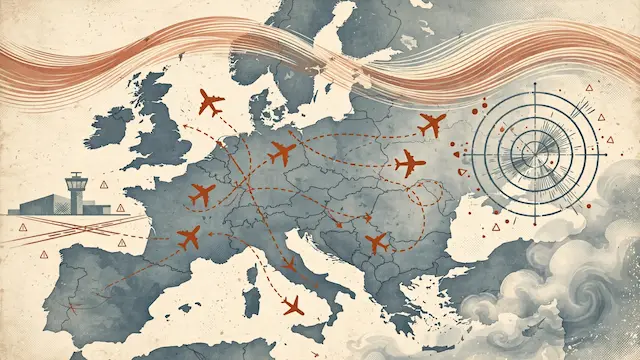
European aviation experienced an exceptionally turbulent week as dozens of flights received false bomb threat alerts. These hoaxes, all confirmed as fake, led to rerouted flights, emergency landings, airport closures, and even fighter jet scrambles. The peak occurred on Thursday, November 5, with at least 25 passenger flights across the continent receiving false warnings. One KLM flight from Amsterdam to Tel Aviv was diverted to Bucharest, where passengers and crew were evacuated for security checks. Another flight from Dublin to Rome, carrying 151 passengers, made an emergency landing at a French air force base. Wizz Air flights from Milan and Ryanair flights to Rome also received threats, with one Dublin-originating flight escorted by Italian fighter jets. The wave of threats, which began last month, intensified early in the week, causing disruptions including a Hungarian fighter jet escort for a Wizz Air flight from London to Sofia and the temporary closure of Modlin Airport for a LOT flight from London to Warsaw. The threats also extended to maritime traffic, with an Israeli passenger ship receiving a false bomb alert. The perpetrators of these false alarms remain unknown, fueling concerns across Europe about a potential coordinated psychological warfare campaign by hostile state actors or hacker groups aiming to sow panic, test response times, and disrupt international transport. Beyond the security scare, the incidents have significant economic and operational consequences, including increased costs for fuel, unexpected airport fees, and passenger accommodation. Low-cost carriers, reliant on quick turnaround times, are particularly affected, with fears that continued disruptions could lead to higher ticket prices. Security agencies face a dilemma of potentially diminishing vigilance due to frequent false alarms, while still being obligated to investigate every threat. To mitigate further air traffic paralysis, the integration of artificial intelligence systems is being considered to help rapidly assess threat credibility in real-time. In response, European Union Transport Commissioner Apostolos Tzitzikostas announced a new European mechanism for coordinating intelligence sharing among member states and the EASA agency. The International Air Transport Association (IATA) condemned the threats and urged authorities to identify those responsible, assuring that security measures remain robust. The CEO of TAP Air Portugal, Luís Rodrigues, suggested that airports will need to dramatically upgrade their systems, combining enhanced physical screening with advanced intelligence verification technologies to shorten response times and protect passengers from these new disruption tactics.
Mentioned
The same event, reported separately by each outlet. Open a few to compare what different newsrooms emphasize — and what they leave out.
Right 1Haredi 1Other 1


Not the same event — other stories that share this one’s people, places, or theme: background, reactions, and follow-ups.



