
Ancient Temple Discovered Near Jerusalem Challenges Historical Perceptions
Translated & summarized from i24NEWS by baba
Archaeologists have discovered a large temple from the First Temple period at Tel Motza, near Jerusalem, challenging previous understandings of religious centralization. The site, featuring an altar and cultic items, suggests a complex religious landscape in ancient Judah, possibly operating in coordination with Jerusalem. The temple was deliberately closed around the 8th century BCE, potentially due to religious reforms aimed at consolidating worship in the capital.
The story in 6 lines · by baba
- A large First Temple period temple was discovered at Tel Motza, near Jerusalem.
- The temple features an altar and cultic vessels, similar to Solomon's Temple.
- The find suggests a more complex religious landscape in ancient Judah than previously thought.
- The site may have operated in coordination with religious institutions in Jerusalem.
- The temple was deliberately buried around the 8th century BCE.
- The discovery could be linked to religious reforms centralizing worship in Jerusalem.
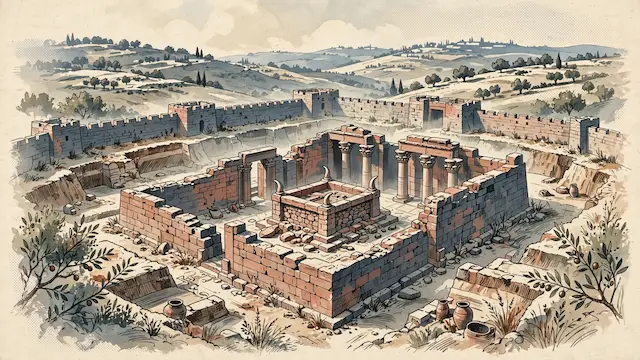
Archaeologists have unearthed a monumental temple from the First Temple period at Tel Motza, a site located a few kilometers west of Jerusalem. The discovery, situated beneath modern road infrastructure, features a courtyard, altar, and cultic vessels, built in an architectural style similar to descriptions of Solomon's Temple. This finding suggests a more complex religious landscape in ancient Judah than previously understood, potentially indicating a coordinated religious function with Jerusalem.
While biblical accounts emphasize the centralization of worship in Jerusalem, the Tel Motza temple, along with other discoveries in places like Arad and Tel Sheva, indicates that the consolidation of religious practice was a gradual process. Researchers use the term "Judahite temple" to describe such sites, acknowledging that they may not equate to modern Judaism and could have incorporated local traditions.
The site yielded intriguing artifacts, including clay figurines of humans and horses, prompting questions about their symbolism related to power, local customs, or lost ritual meanings. A significant find within the temple's foundations was a broken stone relief, seemingly intentionally buried as part of a ritualistic "retirement" or "genizah," possibly to preserve a connection to older traditions during temple renovations.
The temple's closure, around the 8th century BCE, appears to have been a deliberate act of being covered with earth rather than a violent destruction. This event might be linked to the religious reforms of Kings Hezekiah or Josiah, aimed at centralizing worship in Jerusalem, though other administrative or political reasons are also possible. The discovery at Tel Motza adds depth to the understanding of ancient Jewish faith, highlighting its dynamic and diverse nature before the full establishment of Jerusalem as the sole religious center.