
Paraguay's Pro-Israel President Resigns Amid Major Bank Crisis
Translated & summarized from Mako by baba
Paraguayan President Santiago Peña resigned following a major crisis at Ueno Bank, which left three million customers unable to access their funds and sparked protests and impeachment efforts. The bank's collapse led to the Central Bank's takeover due to financial instability, with an estimated $800 million in public funds affected. Peña faced criticism over his past business ties to the bank's parent company and his appointment of the Central Bank governor. Vice President Pedro Alliana is expected to take over and address the fallout.
The story in 6 lines · by baba
- President Santiago Peña resigned due to the collapse of Ueno Bank, affecting three million customers.
- The Central Bank of Paraguay took over Ueno Bank due to financial instability and capital requirement violations.
- Approximately $800 million in public funds were managed by Ueno Bank, including pension and health funds.
- Protests erupted in Asunción, with demonstrators demanding their savings and calling for the president's removal.
- President Peña faced scrutiny over past business ties to the bank's parent company.
- Vice President Pedro Alliana is expected to succeed Peña and manage the crisis.
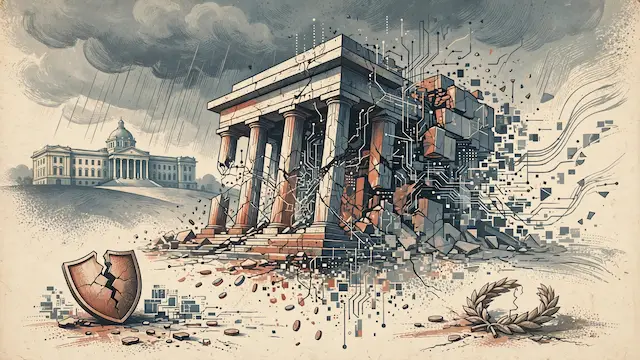
Paraguayan President Santiago Peña announced his resignation Thursday amid a severe financial and political crisis triggered by the collapse of Ueno Bank, one of the country's largest digital banks. The bank's failure left approximately three million customers unable to access their accounts, sparking widespread public protests and an impeachment effort in parliament. Peña stated his decision was made with "consideration for the stability of our country, social peace, and the need to preserve our democratic institutions." He apologized to the public for any disappointment but did not directly accept responsibility for the banking crisis, emphasizing his goal to ensure customers can recover their funds. His Vice President, Pedro Alliana, is expected to succeed him.
The crisis intensified as Peña's own Colorado Party withdrew its support, and opposition lawmakers initiated impeachment proceedings, citing his alleged responsibility for the situation. The bank's collapse followed the Central Bank of Paraguay's takeover, which found Ueno Bank non-compliant with capital and financial stability requirements. The bank, which had grown rapidly, managed an estimated $800 to $850 million in public funds, including those from the government's pension and health fund.
The authorities' intervention led to the suspension of Ueno Bank's services and the closure of its branches, leaving millions, including pensioners, without access to their savings. The situation caused panic in the financial system, with customers rushing to other banks, causing technical issues. Protests erupted in the capital, Asunción, with demonstrators demanding their savings back and calling for the president's ouster, leading to police using tear gas.
Peña faced intense criticism due to his past business ties to the bank's parent company, Grupo Vázquez, in which he held shares until March 2025. Additionally, he appointed Carlos Carvallo, formerly head of the bank's predecessor, as governor of the Central Bank after taking office in 2023. Opposition legislators accused Peña of conflicts of interest and misuse of pension funds.
Authorities have launched an investigation into Ueno Bank's executives, arresting eight senior figures, including the bank's founder and president, and filing charges against 27 managers and businessmen for offenses including breach of trust and attempted fraud. Findings included suspicions of risky loans to parties connected to the bank's owners and improper record-keeping.
Peña, 47, an economist formerly with the International Monetary Fund, maintained close ties with Israel, moving Paraguay's embassy to Jerusalem in December 2024. Paraguay is considered a strong supporter of Israel in Latin America. Following Peña's resignation, Vice President Alliana will likely assume the presidency and confront the banking crisis's fallout, public unrest, and the erosion of public trust.
Mentioned

