
Israel to Increase Water Prices by 2.3% Due to Severe Drought
Translated & summarized from Kipa by baba
Water prices in Israel will increase by 2.3% starting January 1, 2027, due to a severe water crisis caused by drought and delayed desalination projects. The price hike is expected to generate NIS 230 million and add NIS 50 annually to household bills, potentially impacting food prices. An OECD report warns of extreme dry spells in Israel's future.
The story in 5 lines · by baba
- Israel's water prices will rise 2.3% starting January 1, 2027, due to a severe water crisis.
- The price increase is a response to years of low rainfall and delays in desalination plant construction.
- The adjustment is projected to bring in NIS 230 million and cost households an extra NIS 50 yearly.
- The rise could lead to increased prices for fruits, vegetables, and other goods.
- An OECD report forecasts prolonged and extreme dry spells for Israel by the end of the century.
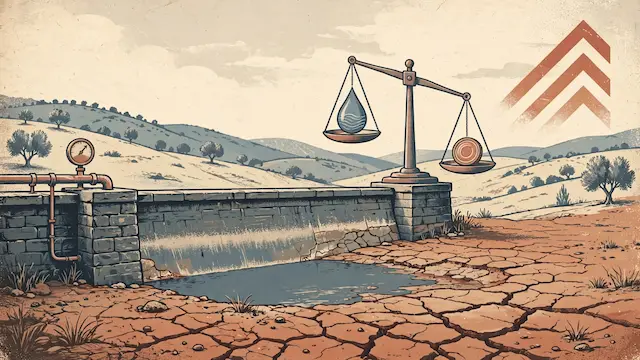
Water prices in Israel are set to rise by 2.3% starting January 1, 2027, following a decision by the Water Authority Council. This price hike is a direct consequence of the ongoing water crisis in the country, attributed to insufficient rainfall in recent years and delays in constructing additional desalination facilities. The Ministry of Finance and the Ministry of Environmental Protection had initially proposed a doubling of the tariff increase to fund upgrades to water systems and encourage conservation, according to Channel 12 News. The anticipated price adjustment is expected to generate approximately NIS 230 million for the water economy and could add about NIS 50 annually to household expenses. While this increase may seem modest for consumers, it could potentially lead to higher prices for fruits, vegetables, and other goods. Israel has been grappling with severe drought conditions, with an OECD report warning of prolonged and extreme dry spells by the end of the century. Last August, five major desalination plants were temporarily shut down due to an influx of algae from the Nile region and unusual turbidity in seawater. To maintain drinking water supply, farmers and local authorities were instructed to limit irrigation, while pumping from the Sea of Galilee and local boreholes was intensified. Although the water economy was later declared stable, this new price increase casts doubt on that assessment.
Mentioned
The same event, reported separately by each outlet. Open a few to compare what different newsrooms emphasize — and what they leave out.
Centre 1Right 1Arab 2




Not the same event — other stories that share this one’s people, places, or theme: background, reactions, and follow-ups.



