
Fitch Predicts Early Elections in Israel, Keeps Credit Rating Unchanged
Translated & summarized from Channel 13 by baba
Credit rating agency Fitch has affirmed Israel's credit rating and predicted that the most probable outcome is new elections in April 2027. The agency anticipates the Knesset may dissolve in early January if a government cannot be formed, potentially delaying the 2027 budget. Fitch forecasts a rise in the debt-to-GDP ratio, even with temporary deficit reduction measures.
The story in 5 lines · by baba
- Fitch maintained Israel's credit rating and predicted new elections in April 2027.
- The Knesset may dissolve in early January if a government cannot be formed.
- The 2027 budget is unlikely to be approved before potential new elections.
- Spending will be limited by the 2026 ceiling if no new budget is passed.
- Fitch forecasts a rise in Israel's debt-to-GDP ratio.
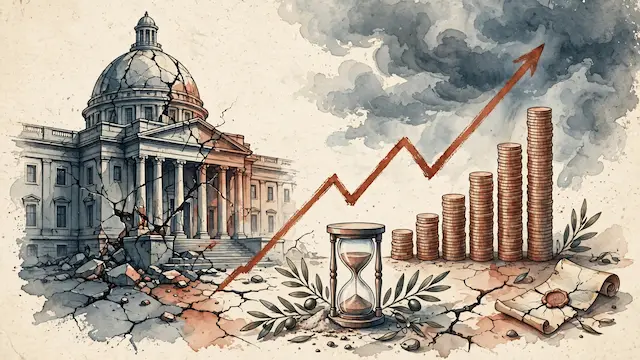
Fitch, the world's third-largest credit rating agency, announced on Friday its decision to maintain Israel's credit rating without change. The agency forecasts that the most likely scenario is a return to elections in April 2027. Fitch also assessed that the Knesset (parliament) could dissolve in early January if efforts to form a government fail. Consequently, the 2027 budget is unlikely to be approved before new elections.
In the event of early elections and a lack of an approved budget, the spending ceiling from 2026, approximately NIS 699 billion with a 1.5% population growth adjustment, would limit monthly expenditures. While this could temporarily reduce the deficit, Fitch noted that this is not equivalent to planned and sustainable measures to decrease debt. Therefore, the agency still anticipates an increase in the debt-to-GDP ratio, diverging from the forecasts of the Bank of Israel.
Mentioned
The same event, reported separately by each outlet. Open a few to compare what different newsrooms emphasize — and what they leave out.
Left 1Centre 2Other 1



Not the same event — other stories that share this one’s people, places, or theme: background, reactions, and follow-ups.




