
Stormy Weather Expected on Election Day, With Flash Flood Warnings Issued
Translated & summarized from Now 14 by baba
Israel is facing severe weather including rain, hail, and strong winds on Election Day for the 26th Knesset. Flash flood warnings are in effect for southern and eastern regions, particularly the Negev, Arava, Judean Desert, and Dead Sea, between noon and 10 PM. The Israel Meteorological Service advises caution, especially for voters in these areas, with the storm expected to peak in the afternoon.
The story in 5 lines · by baba
- Severe weather with rain, hail, and strong winds is forecast for Israel's Election Day.
- Flash flood warnings are active for the Negev, Arava, Judean Desert, and Dead Sea.
- The storm's peak is expected between 12:00 PM and 10:00 PM on election day.
- Voters are urged to prepare for difficult weather conditions, especially in southern and eastern Israel.
- Thunderstorms are most likely in the afternoon and early evening hours.
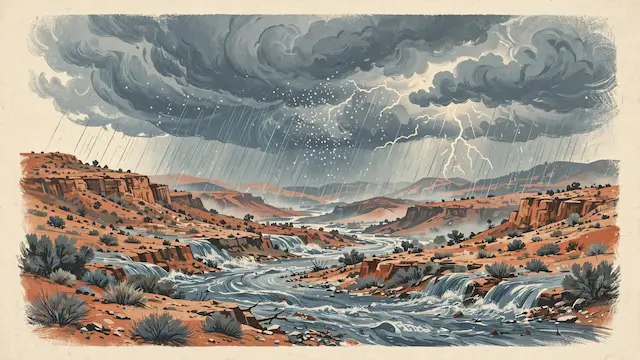
Israel is bracing for severe weather conditions on Election Day for the 26th Knesset, with heavy rains, hail, and strong winds predicted across much of the country. Temperatures are expected to drop, and local showers are forecast for most regions, potentially including thunderstorms. The weather is anticipated to worsen towards the afternoon, with increased rainfall, hail, and gusty winds.
A significant concern is the risk of flash floods in the streams of the Negev, Arava, Judean Desert, and the Dead Sea region. Authorities are urging the public, especially those heading to polling stations, to be prepared for the challenging conditions and to avoid entering wadis or crossing flooded roads.
The most intense period of the storm is expected between 12:00 PM and 10:00 PM, with a specific orange alert issued for the Judean Desert, Dead Sea, Negev, and Arava areas due to the high likelihood of heavy rains causing flash floods. Thunderstorms are particularly likely between 2:00 PM and 3:00 PM, with a potential resurgence of rain and thunder around 7:00 PM to 8:00 PM, though these times are estimates.
Dr. Amir Givati, Director of the Israel Meteorological Service, noted that the system is primarily southern and eastern, meaning most Israelis may not experience the severe weather while voting. The main risk areas are Eilat, the Negev, the Arava, and the Dead Sea.
Keep up with
Mentioned