
Netanyahu May Escalate Security to Delay Elections, Analysts Suggest
Translated & summarized from Arab48 by baba
Israeli Prime Minister Benjamin Netanyahu is reportedly considering a security escalation to potentially delay the October 27 elections, as polls suggest he may lose. Analysts suggest this move is driven by his personal fear of conviction and imprisonment. While intelligence indicates potential threats from Iran, some security sources see no immediate need for action. Escalation could also occur in the West Bank due to settler violence, potentially impacting government formation if election results are unclear.
The story in 6 lines · by baba
- Israeli Prime Minister Benjamin Netanyahu may seek a security escalation to delay elections due to poor poll numbers.
- Netanyahu reportedly fears losing power will lead to conviction and imprisonment.
- Analysts suggest Netanyahu is willing to use "any trick, deception, or lie" to avoid jail.
- Potential escalations include actions against Iran or increased settler violence in the West Bank.
- US President Donald Trump reportedly did not give Israel a green light for an attack on Iran.
- Israeli Army Chief of Staff Eyal Zamir faces a difficult decision if ordered to act for political reasons.
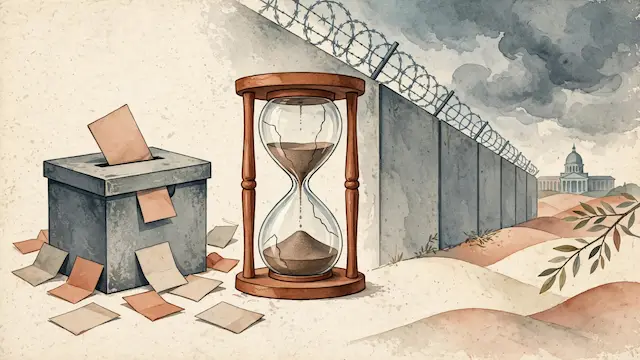
Speculation is circulating in Israel that a security escalation on one or more fronts could lead to the postponement of the upcoming elections, scheduled for October 27. Such a delay would reportedly benefit Prime Minister Benjamin Netanyahu, as current polls suggest he might not win.
Netanyahu views a loss in the elections as a personal "catastrophe," believing it could lead to his conviction in his ongoing criminal trial and potential imprisonment. This contrasts with many legal analysts who anticipate he might reach a plea deal if he loses power. Military analyst Amos Harel noted that Netanyahu's current behavior suggests he is willing to employ any "trick, deception, or lie" to avoid jail time.
In recent weeks, Netanyahu has spoken of a security escalation, claiming intelligence indicates enemies are planning actions before the elections. He reportedly discussed with then-US President Donald Trump the possibility of Israel attacking Iran, alone or with US support, though Trump did not give a green light. Israeli Army Chief of Staff Eyal Zamir acknowledged increased regional escalation risks due to heightened alerts across all fronts.
Despite intelligence reports about Iran resuming nuclear and ballistic missile program activities, some Israeli security sources believe there is no urgent need for immediate action before the elections. Harel suggests that any potential offensive action, particularly against Iran, hinges on decisions by Trump and Zamir. Trump has maintained a distance, possibly due to unmet expectations regarding Iran's regime change.
Analysts also point to potential escalation in the West Bank due to settler violence against Palestinian farmers, with the Israeli military, police, and Shin Bet criticized for their perceived inaction. The possibility of security chaos, especially if election results are inconclusive, could complicate the formation of a government, particularly one relying on Arab party support. Harel also recalled past instances where Netanyahu allegedly pushed for military actions, such as the failed assassination attempt in Doha, which led to US anger and a subsequent imposed agreement, highlighting Zamir's role in delaying military operations.
If the government orders an attack motivated by election fears, Zamir would face a difficult decision. An escalation could also occur after the elections, similar to the "Guardian of the Walls" operation in Gaza following the March 2021 elections when Netanyahu was forming a government.
Mentioned



