
Netanyahu Faces Declining Support Amidst Political Turmoil and Legal Battles
Translated & summarized from Maariv by baba
Prime Minister Benjamin Netanyahu faces a significant drop in support, with his Likud party polling at historic lows, as new right-wing parties emerge and voter disillusionment grows. Polls indicate Gadi Eisenkot leads Netanyahu in suitability for prime minister, a key indicator of election outcomes. The article also draws parallels between Netanyahu's administration and a "criminal underworld" culture, citing legal challenges and alleged witness intimidation tactics. The upcoming election is framed as a critical juncture for Israel's future, with voter turnout being a decisive factor.
The story in 6 lines · by baba
- Prime Minister Benjamin Netanyahu's Likud party is experiencing a significant decline in support, polling at near-historic lows.
- Gadi Eisenkot is consistently leading Benjamin Netanyahu in polls for suitability as prime minister.
- New right-wing parties are emerging and drawing votes, complicating the political landscape.
- The article alleges Netanyahu's administration operates with a "criminal underworld" culture, citing legal challenges and witness intimidation.
- Voter turnout and the ability of parties to cross the electoral threshold are seen as decisive factors in the upcoming election.
- Jonathan Uriach, an associate of Netanyahu, is criticized for alleged dealings with Qatar during the war.
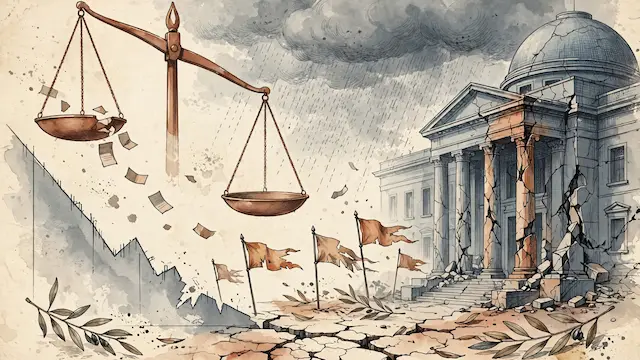
Prime Minister Benjamin Netanyahu is facing significant challenges as his Likud party's support plummets in opinion polls, according to analyst Ben Caspit. The Likud, which secured 32 seats in the previous election, is now polling around 20 seats, a near-historic low. Caspit attributes this decline to a third of Netanyahu's former voters being unwilling to support him again, citing disillusionment despite the Likud's campaign tactics. The shift in the political landscape is further complicated by the emergence of new right-wing parties, such as those led by Yoaz Hendel and Avi Winter, which are drawing votes away from both the Likud and the opposition.
Caspit argues that the current political struggle is not a simple left-right divide, but rather a contest between those supporting Netanyahu and a broader "change bloc" that includes many right-wing individuals. He notes that former Netanyahu voters, disillusioned with the Prime Minister, have been drawn to new right-wing parties, while the Arab electorate's increased turnout also impacts the opposition's potential gains. The outcome of the election, Caspit suggests, will hinge on voter turnout and the ability of parties to cross the electoral threshold.
The article also highlights a significant drop in Netanyahu's approval ratings as prime minister, with Gadi Eisenkot consistently leading him in polls for suitability for the role. This trend, unusual in modern Israeli politics, is seen as a strong indicator of election results. Caspit contrasts this with the perceived effectiveness of the opposition's efforts, particularly mentioning Eisenkot's direct engagement with voters and Avigdor Lieberman's strategic campaigning.
Furthermore, the piece delves into the legal challenges facing Netanyahu, drawing parallels to organized crime families. It references the lawsuit filed by former Shin Bet chief Ronen Bar, detailing numerous warnings about Hamas that Netanyahu allegedly ignored. The article suggests that Netanyahu's administration operates with a "criminal underworld" culture, characterized by paranoia, threats, and disregard for the law. Specific instances, like Netanyahu's appearance at Avichai Mandelblit's trial and Sara Netanyahu's visit during Arnon Milchan's testimony, are cited as attempts to intimidate witnesses.
Finally, the article criticizes Jonathan Uriach, a Netanyahu associate, for alleged dealings with Qatar during the war, including meetings with senior Qatari officials. This is presented as further evidence of questionable conduct within Netanyahu's circle, contrasting sharply with Qatar's public stance against Israel. The author concludes by urging voters not to be complacent, emphasizing the critical juncture at which Israel stands and the importance of actively participating in the election to secure a Jewish, liberal, and democratic future.
Mentioned
Not the same event — other stories that share this one’s people, places, or theme: background, reactions, and follow-ups.
