
New Regulations Shift Construction Safety Responsibility to Project Initiators
Translated & summarized from Zman Yisrael by baba
New Israeli regulations effective October 16, 2026, will hold project initiators, not just contractors, responsible for construction safety. The changes require integrating safety into project management, budgeting, and decision-making, with increased legal scrutiny after accidents. This aims to ensure reported risks are addressed and safety is a core business consideration.
The story in 5 lines · by baba
- New Israeli regulations shift construction safety responsibility to project initiators starting October 16, 2026.
- Initiators must now integrate safety into project management, contracting, and budgeting.
- The regulations expand legal and criminal liability for initiators following safety incidents.
- Safety documentation must reflect a complete process from reporting to remediation.
- The changes aim to embed safety within organizational decision-making and control mechanisms.
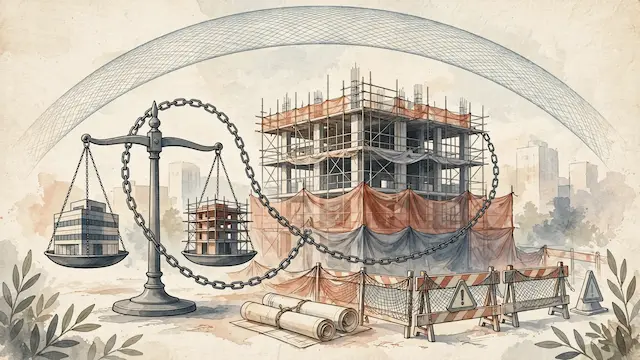
A recent building collapse in Israel, which narrowly avoided fatalities, has highlighted the critical need for accountability in construction safety. New regulations, set to take effect on October 16, 2026, will expand the scope of responsibility beyond site contractors to include project initiators, such as developers and public bodies. This change mandates that safety considerations become an integral part of project management, from initial contracting and budgeting to decision-making processes.
The updated regulations require initiators to actively engage in safety oversight, including defining safety requirements in contracts, allocating necessary resources, appointing safety supervisors, and monitoring the remediation of safety deficiencies. This marks a significant shift, making safety a business decision that must be factored into project timelines and financial planning, rather than an afterthought handled solely by contractors.
Legally, the new rules mean that after an accident, investigations will scrutinize not only the site's immediate failings but also who knew about risks, to whom the information was conveyed, and what actions were taken. While not every accident will automatically lead to criminal liability for initiators, the expanded direct obligations necessitate ensuring that reported risks lead to concrete actions and that information flows effectively within the organization.
Documentation of safety issues is no longer sufficient; it must reflect a process of reporting, escalation, decision-making, resource allocation, remediation, and effectiveness checks. Clear channels for reporting and addressing deficiencies are crucial. The article emphasizes that safety cannot remain solely the domain of on-site professionals but must be embedded in a company's decision-making and control mechanisms. Attorney Claudia David, an expert in criminal negligence and workplace safety, notes that clear regulatory guidance is needed alongside robust enforcement to address potential ambiguities in the new rules.
Mentioned
The same event, reported separately by each outlet. Open a few to compare what different newsrooms emphasize — and what they leave out.
Centre 1Other 2


Not the same event — other stories that share this one’s people, places, or theme: background, reactions, and follow-ups.


