
Israelis Often Don't Need to Pay for Old Appliance Removal
Translated & summarized from Bizportal by baba
Israeli consumers are often overcharged for the removal of old appliances when buying new ones, as the law generally requires sellers to provide this service for free. Exceptions exist for difficult removals, such as carrying an appliance down three or more flights of stairs without an elevator, but these must be disclosed upfront. Consumers should prepare old appliances for removal and question any unexpected charges, reporting non-compliance to the Ministry of Environmental Protection.
The story in 6 lines · by baba
- Israeli law generally requires sellers to remove old appliances for free when delivering new ones.
- Additional fees for appliance removal are only permitted in specific, pre-disclosed circumstances.
- Exceptions for free removal include carrying appliances down three or more flights of stairs without an elevator.
- Stores must inform customers of potential removal fees at the time of sale.
- Consumers can report non-compliant sellers to the Ministry of Environmental Protection.
- The regulation aims to facilitate proper recycling of old appliances.
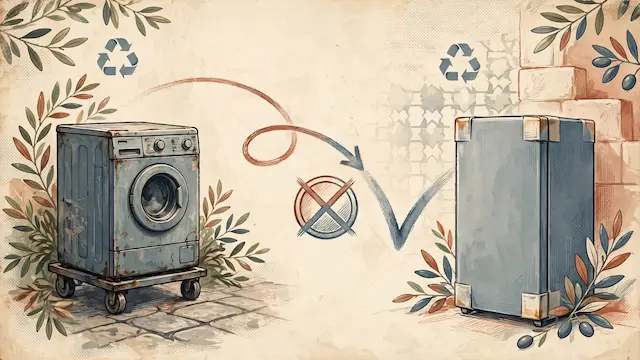
Consumers in Israel are often wrongly charged for the removal of old appliances when purchasing new ones, according to a recent clarification of regulations. Israeli law mandates that sellers of new household electrical and electronic equipment must accept a customer's old, similar device upon the purchase or delivery of a new one. This obligation applies regardless of the appliance's brand, age, or where it was previously bought. The responsibility lies with the store where the new appliance was purchased, even if they use an external delivery company.
An updated directive from the Ministry of Environmental Protection, effective June 2025, clarifies these rules and outlines specific exceptions where additional fees may be permissible. Generally, removal should be free. However, charges can be levied for large appliances if the old unit must be carried down three or more flights of stairs without an elevator. Other exceptions include situations requiring a crane for both delivery and removal, or if the old appliance needs dismantling to exit the premises, such as removing a refrigerator door to fit through a doorway. An additional charge may also apply if the delivery personnel must wait more than five minutes for the customer to prepare the old appliance for removal.
Even when an exception applies, stores must inform customers about potential fees at the time of sale, and any charges must be agreed upon in advance. The law does not require the old appliance to be identical to the new one; a similar type of appliance is sufficient, even if there are differences in size or specifications. Customers are responsible for preparing the old appliance for removal by emptying and disconnecting it, ensuring clear pathways, and verifying that it can be safely removed without special disassembly. If movers demand extra payment for what appears to be a standard removal, customers should question the reason and contact the store. If the store fails to comply, consumers can report the issue to the Ministry of Environmental Protection's Public Complaints Department. The environmental goal behind the regulation is to ensure proper recycling of old appliances, preventing them from becoming waste.