
Deadly Gas Explosion at Intel Plant in Israel Kills One, Injures Two
Translated & summarized from Israel Hayom by baba
An explosion at the Intel factory in Kiryat Gat, caused by the hazardous gas trifluorine nitrogen (NF₃), killed one person and seriously injured two others. The gas, used in chip manufacturing, can impair oxygen transport in the blood and damage organs. The exact cause of the explosion and the origin of the victims' burns are still under investigation, though decomposition of the gas can create dangerous substances like hydrofluoric acid.
The story in 5 lines · by baba
- One person died and two were seriously injured in an explosion at the Intel factory in Kiryat Gat.
- The explosion was caused by trifluorine nitrogen (NF₃), a hazardous gas used in the chip industry.
- Exposure to NF₃ can damage the respiratory system and impair the blood's ability to carry oxygen.
- The victims suffered burns, but the exact cause, whether from the explosion or the gas, is under investigation.
- NF₃ is a reactive gas, and its decomposition can create dangerous substances like hydrofluoric acid.
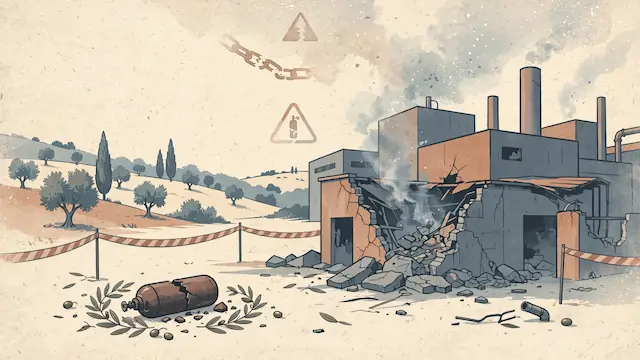
An explosion at the Intel factory in Kiryat Gat on Wednesday was caused by trifluorine nitrogen (NF₃), a hazardous gas used in the chip industry. The incident resulted in one fatality and two serious injuries, with all three victims suffering from burns and being evacuated to Soroka Hospital. Officials stated that the truck involved was carrying material used in the factory's processes, leading to the declaration of a hazardous materials incident.
NF₃ is a reactive gas, though not flammable itself, that poses significant health risks. Exposure can damage the respiratory system, impair the blood's oxygen-carrying capacity, and in severe cases, lead to organ damage or death. Dr. Betsalel Eliyav, a senior physician and poison control specialist, explained that a major danger is methemoglobinemia, a condition where hemoglobin cannot transport oxygen to tissues, potentially causing cyanosis, tissue hypoxia, and death. Treatment with methylene blue can restore normal oxygen transport.
It remains unclear whether the burns sustained by the victims were caused by the explosion itself, direct contact with the NF₃, or by hazardous byproducts formed during its decomposition, such as hydrofluoric acid. Hydrofluoric acid can cause severe burns and disrupt the body's electrolyte balance, significantly lowering calcium and magnesium levels while increasing potassium. Dr. Eliyav noted that while NF₃ is common in silicon-based industries like chip manufacturing, significant exposure incidents are rare, stating he had not personally encountered such an event before.
Mentioned
The same event, reported separately by each outlet. Open a few to compare what different newsrooms emphasize — and what they leave out.
Centre 2Right 4Haredi 1Other 1








Not the same event — other stories that share this one’s people, places, or theme: background, reactions, and follow-ups.
