Israel Returns 22 Ancient Artifacts to Greece
Translated & summarized from Vesty by baba
Israel has returned 22 ancient artifacts, seized in 2020, to Greece in a ceremony in Athens. The items, including ancient Greek pottery, were discovered during an investigation into illegal antiquities trade. This marks the first time Israel has returned such items to Greece. Officials from both countries highlighted the importance of cooperation in combating illicit trade and protecting cultural heritage.
The story in 6 lines · by baba
- Israel returned 22 ancient artifacts to Greece, seized in 2020 from Gush Dan warehouses.
- The handover occurred at the National Archaeological Museum in Athens after legal proceedings concluded.
- The artifacts include ancient Greek pottery dating from the 8th to 4th centuries BCE.
- The items were found during an investigation into illegal antiquities trade and looting.
- This is the first instance of Israel returning antiquities to Greece.
- Officials stressed cooperation in protecting cultural heritage and fighting illicit trade.
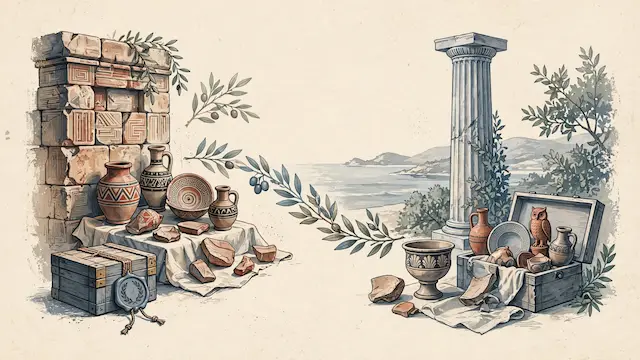
Israel has returned 22 ancient artifacts, seized in 2020 from warehouses in the Gush Dan region, to Greece. The handover ceremony took place on Wednesday, October 14, at the National Archaeological Museum in Athens, following the conclusion of legal proceedings and confiscation of the items in Israel. This marks the first instance of Israel returning antiquities to Greece, according to the Israel Antiquities Authority.
The artifacts were discovered during an investigation into the illegal trade of archaeological items. The operation involved a joint effort between the Israel Antiquities Authority's Unit for Prevention of Looting of Antiquities, the Israel Police, and the Tax Authority. Searches were conducted at a gallery, warehouses, and suspects' apartments in Gush Dan, where thousands of archaeological items from Israel and other countries were found.
Investigators suspected the individuals involved in the illegal trade of museum-value items, as well as the storage of artifacts looted from ancient settlements and tombs across the Mediterranean and other regions. Among the returned items are ancient Greek pottery, including vessels from the 7th century BCE decorated in a style influenced by ancient Near Eastern art, and vessels with depictions from Greek mythology dating from the 8th to 4th centuries BCE. These vessels were used in daily life and for rituals, including burials.
The handover ceremony was attended by Greece's Minister of Culture Lina Mendoni, the Israeli Ambassador to Greece Pnina Yanai, and Amir Ganor, head of the Israel Antiquities Authority's Unit for Prevention of Looting. The Israel Antiquities Authority emphasized that the event not only signified the return of antiquities but also deepened professional ties between the law enforcement agencies of both countries, reaffirming a shared commitment to protecting cultural heritage.
"This is the first time Israel is returning antiquities to Greece, and it lays the foundation for deepening cooperation," stated Minister Mendoni. "Every return of antiquities to their homeland carries broad moral and symbolic meaning. It reminds us that protecting cultural heritage is a shared responsibility, and effective combating of illegal antiquities trade requires state cooperation, mutual trust, and commitment to law and heritage."
Amir Ganor added, "Illegal antiquities trade knows no borders, neither legal nor between states. Antiquities looted in one country end up in another, causing irreparable damage to the country of origin's cultural heritage. Illegal trade masks terrorism financing and organized crime, and serves as a method for money laundering. Disrupting smuggling chains and preventing illicit enrichment from antiquities helps prevent various criminal activities and, undoubtedly, protects cultural heritage sites."
Mentioned