
2026 Midterms: Trump's Challenge and Shifting Power in Washington
Translated & summarized from Panet by baba
The US midterm elections on November 3, 2026, are a critical test for Donald Trump's political future amid declining approval, economic pressures, and the Iran war. Polling suggests Democrats may regain the House of Representatives and compete for the Senate, though Republican losses are not guaranteed. Economic conditions and the ongoing conflict are key factors influencing voter behavior. A shift in congressional control could increase oversight and legislative challenges for the Trump administration, impacting its ability to enact its agenda.
The story in 6 lines · by baba
- US midterm elections on November 3, 2026, will test Donald Trump's political future and Republican party control.
- Democrats have improved chances of regaining the House of Representatives and competing for the Senate.
- Declining approval ratings, economic pressures, and the Iran war are key factors influencing the election.
- Trump's ability to mobilize his base may alienate independent voters, creating a challenge for Republican candidates.
- Economic conditions and the ongoing conflict with Iran are significant determinants of voter behavior.
- A Democratic takeover of Congress could increase oversight and legislative challenges for the administration.
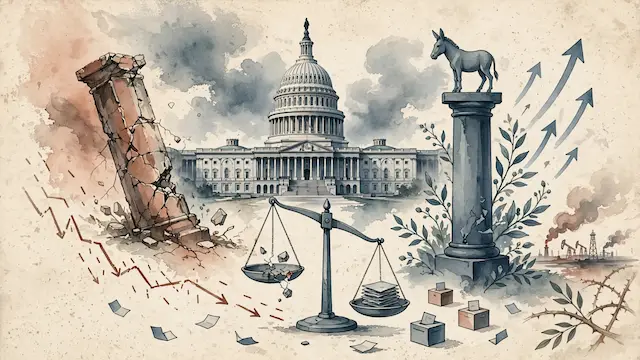
The US midterm elections scheduled for November 3, 2026, are shaping up to be a critical test for Donald Trump's political future and his ability to maintain control over the Republican party. Professor Hussein Al-Deek notes that declining approval ratings, ongoing economic pressures, and the repercussions of the war with Iran are forcing the Republican party into a battle that will define the relationship between the White House and Congress. Current polling suggests Democrats have an improved chance of regaining the House of Representatives and may also compete for the Senate. However, a Republican loss is not yet a certainty, as outcomes will depend on electoral maps, voter turnout, and each party's ability to translate public opinion into votes.
Trump faces a dilemma where his ability to mobilize his base could alienate independent and swing voters. While he can still rally supporters and influence the party agenda, he also bears responsibility for declining public trust, with a recent Pew Center poll showing only 30% approval. Republican candidates may struggle to balance leveraging Trump's base support with avoiding association with perceived failures of his administration. Midterm elections are particularly sensitive to economic conditions and local issues, meaning the polarization that helped Trump win the presidency could become a liability for his party's candidates in swing districts.
The economy is a key factor, as voters assess leadership based on their personal financial well-being, not just abstract indicators. The ongoing war with Iran adds further pressure, raising questions about strategic goals and economic impacts, including energy prices and public spending. Trump's focus on "America First" and avoiding prolonged wars could be challenged if the conflict continues without clear results. The interplay between the war and the economy, with rising oil prices affecting daily life, could become a significant electoral pressure point. However, the conflict might also allow the president to bolster his national security credentials, depending on public perception of its necessity and costs.
Republicans hold a slim majority in the House, making them vulnerable to shifts in competitive districts. Democrats could potentially reclaim the chamber with modest gains, especially if their turnout increases and Republican support among independents wanes. The Senate race is more complex due to varying state electoral maps. A Democratic takeover of both chambers would empower them to expand congressional oversight, launch investigations, and influence legislation and budgets, potentially limiting White House initiatives. While presidential powers in foreign policy and national security would remain, inter-branch relations would likely become more competitive.
The current climate offers Democrats an opportunity to frame the election as a referendum on Trump's administration. However, winning requires more than just capitalizing on his declining popularity; the party needs to present convincing alternatives on economic and foreign policy and unify its message. A vote against the ruling party may reflect dissatisfaction with living costs and the war rather than a full endorsement of the opposition's agenda. The ultimate value of any Democratic gains will depend on their ability to translate them into tangible policies.
Changes in congressional control are unlikely to cause immediate shifts in US policy toward Iran, Israel, or the Palestinian issue, as the president retains significant foreign relations authority. However, Congress can influence funding, oversight, and legislation, altering the political environment. A Democratic majority might open more space for discussing aid, war repercussions, and Israeli policies in the Palestinian territories, but actual policy changes will depend on party balances and strategic interests. The 2026 midterms hinge on Trump's popularity, economic pressures, and the Iran war's consequences, offering Democrats a chance but no guaranteed victory. The election will reveal the limits of presidential power and the extent to which voters will translate their discontent into a shift in Washington's power map.
Mentioned
The same event, reported separately by each outlet. Open a few to compare what different newsrooms emphasize — and what they leave out.
Left 1Arab 1

Not the same event — other stories that share this one’s people, places, or theme: background, reactions, and follow-ups.


