
IMF Boosts Israel Growth Forecast, But Cost of Living Concerns Remain
Translated & summarized from Ice by baba
The International Monetary Fund has increased Israel's economic growth forecast for 2026 to 4.5%, while also predicting a slowdown in inflation. The IMF expects unemployment to rise slightly and the current account surplus to decrease. Despite these positive macroeconomic indicators, the report highlights that Israeli households continue to face a high cost of living, questioning if the economic improvements will be felt by consumers.
The story in 5 lines · by baba
- The IMF raised Israel's 2026 growth forecast to 4.5%, a significant increase from its previous estimate.
- Inflation in Israel is projected to slow down, falling to 1.8% in 2026 according to the IMF.
- Unemployment is expected to see a slight increase, reaching 3.2% by 2027.
- The IMF report notes Israel's participation in the global AI hardware supply chain.
- Despite positive macro forecasts, the high cost of living remains a major concern for Israeli households.
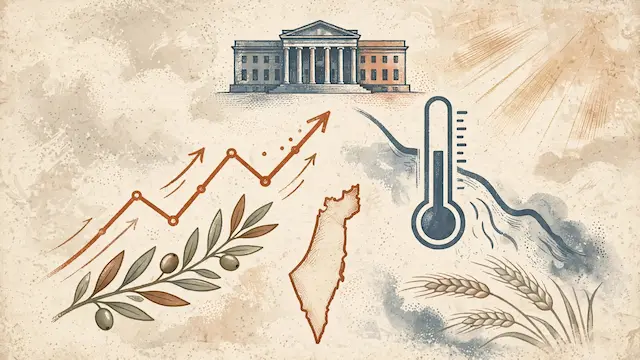
The International Monetary Fund (IMF) has significantly raised its economic growth forecast for Israel, projecting a 4.5% expansion in 2026, up from a previous estimate of 3.5%. The IMF also anticipates a 4.4% growth rate for 2027. This updated outlook is more optimistic than the Israeli Ministry of Finance's forecast for 2026 but trails their projection for 2027. The IMF's July 2026 forecast had predicted similar growth for 2026, but the October update reflects a more positive assessment. The IMF's figures suggest Israel's annual growth was 3.5% in 2025. The IMF also foresees a slowdown in inflation, estimating it to decrease from 3% in 2025 to 1.8% in 2026, with a slight rise to 2% in 2027. While this indicates a moderation in price increases, it does not necessarily mean prices will fall, and it does not guarantee immediate changes to the Bank of Israel's interest rate policy.
Regarding employment, the IMF projects a slight increase in Israel's unemployment rate from 3% in 2025 to 3.1% in 2026 and 3.2% in 2027. The current account surplus is also expected to shrink gradually, from 2.1% of GDP in 2025 to 1.1% in 2027. The IMF's report highlights Israel's role in the global supply chain for artificial intelligence (AI) hardware. The overall IMF picture combines expectations of accelerated growth and moderating inflation with a stable labor market and a declining current account surplus. However, the report notes a significant gap between these positive macroeconomic indicators and the daily financial realities faced by Israeli households, who continue to grapple with a high cost of living and heavy expenses. The key question remains whether these macroeconomic improvements will translate into tangible relief for consumers or remain confined to economic forecasts.
The same event, reported separately by each outlet. Open a few to compare what different newsrooms emphasize — and what they leave out.
Centre 3Right 2Other 4








Not the same event — other stories that share this one’s people, places, or theme: background, reactions, and follow-ups.


