
Hezbollah Responsible for Deadly Cluster Bomb Incident in Northern Israel
Translated & summarized from Walla by baba
A cluster bomb, allegedly fired by Hezbollah, killed Yair Wilensky and injured others in northern Israel, highlighting the dangers of unexploded ordnance. While internal safety failures are being investigated, Hezbollah is identified as responsible for the attack. The incident has renewed calls for enhanced safety education and sweeps of hiking trails, but the article asserts Israelis will continue to explore their country, albeit with increased caution.
The story in 6 lines · by baba
- Hezbollah is responsible for firing the cluster bomb that killed Yair Wilensky in northern Israel.
- The unexploded ordnance poses a long-term danger to civilians, as warned by the International Red Cross.
- Internal safety protocols and adherence to rules are being investigated following the fatal incident.
- Discussions are underway to temporarily suspend hiking tours for safety sweeps in the affected region.
- The article emphasizes the importance of educating children and the public on how to handle suspicious objects.
- Israelis are determined to continue hiking and exploring the country despite the risks.
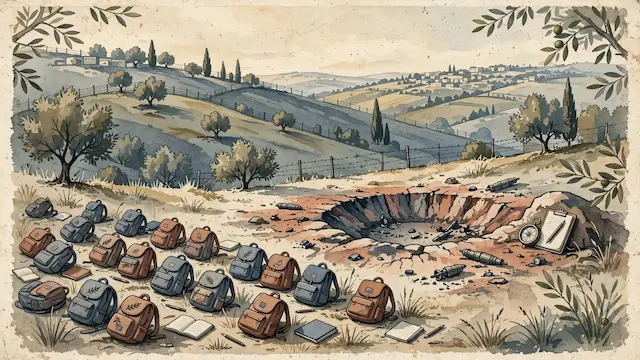
A tragic incident in northern Israel, where a cluster bomb killed a young man and injured others, serves as a stark reminder of the ongoing conflict in the region. The bomb, which exploded on Monday, was reportedly fired by Hezbollah with the intent to kill Israelis. The article emphasizes that while internal failures in safety protocols must be investigated, Hezbollah bears the ultimate responsibility for the death of Yair Wilensky.
Cluster munitions pose a long-term threat, as unexploded submunitions can remain dormant for years and detonate upon contact, endangering civilians long after hostilities cease. The International Red Cross has repeatedly warned about the dangers of cluster bombs and called for their condemnation. The incident has prompted discussions about temporarily suspending hiking tours in the north for further sweeps of popular routes and campgrounds, though the article suggests this focus may fade quickly.
The author stresses the critical need to reinforce safety instructions, especially for children and youth, emphasizing the rule: "Do not touch suspicious objects." Instead, people should move away, keep others at a distance, and alert the police. This caution is particularly vital in the north, where remnants of conflict, including unexploded ordnance and drone debris, have been found previously.
Despite the pain and loss, the article concludes with a defiant message of resilience, stating that Israelis will not be deterred from hiking and exploring their country. It calls for renewed commitment to safety measures, including sweeping areas, clearing unexploded ordnance, and educating guides and children. The message is clear: the love for the land necessitates ensuring the safety of those who walk it, with the ultimate goal that every child who sets out returns home safely.
The same event, reported separately by each outlet. Open a few to compare what different newsrooms emphasize — and what they leave out.
Centre 1Right 2Other 2





Not the same event — other stories that share this one’s people, places, or theme: background, reactions, and follow-ups.



