
IDF Assesses Cluster Bomb That Killed Student Was Fired at Troops
Translated & summarized from Maariv by baba
The IDF estimates that a cluster bomb that killed a student at Ramim Ridge was originally fired at IDF forces and failed to detonate due to terrain. The munition, which had remained armed since the war, exploded when touched by a youth. Hezbollah and Iran have also used cluster bombs during recent conflicts. Legal experts suggest investigating potential negligence and considering recognition of the victims as casualties of hostile acts.
The story in 5 lines · by baba
- The IDF believes a cluster bomb that killed a student at Ramim Ridge was fired at troops and failed to detonate.
- Difficult terrain conditions likely concealed the armed cluster bomb, which exploded when touched by a youth.
- Hezbollah and Iran have also used cluster bombs in recent conflicts, causing significant damage and casualties.
- Legal experts are calling for an investigation into potential negligence and recognition of victims as casualties of hostile acts.
- The IDF has historically used cluster bombs but reduced their use following international criticism.
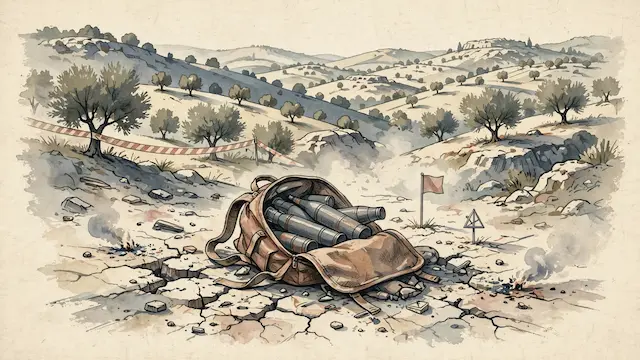
The Israel Defense Forces (IDF) now estimates that the cluster bomb that exploded at the Ramim Ridge, killing a student, was originally fired at IDF forces operating in the area. The military is examining the possibility that difficult terrain conditions concealed the dangerous munition, which had remained armed since the war.
The IDF has used cluster bombs in the past, notably during the War of Attrition to target Egyptian missile arrays along the Suez Canal, and during the Second Lebanon War with MLRS rockets. International criticism has led the IDF to reduce its use of such munitions.
The article notes that Hezbollah used prohibited cluster bombs during the "Swords of Iron" war, firing them at IDF assembly areas and maneuvering forces in Lebanon, causing casualties. Iran also employed cluster bombs, using missiles with a submunition warhead that dispersed smaller bombs over the Gush Dan and Haifa areas.
According to the initial IDF assessment, the cluster bomb that injured students from Ma'alot was previously fired at IDF forces near an Engineering Corps outpost. One of the submunitions likely landed and failed to detonate. Due to dense vegetation, mud, and mountainous terrain, it was apparently missed by police and IDF sappers who cleared the area. The bomb's armed state meant that when a youth touched it, it detonated, causing the fatal explosion.
Advocate Meya Shalom stated that a report of an unaddressed dud or a known, unmarked danger could indicate negligence requiring investigation. She added that alongside the investigation into responsibility, consideration should be given to recognizing the victims as casualties of hostile acts, which could provide medical treatment, rehabilitation, psychological support, and compensation. Furthermore, there may be grounds for a civil lawsuit, and families need ongoing support.
Mentioned
The same event, reported separately by each outlet. Open a few to compare what different newsrooms emphasize — and what they leave out.
Centre 3Right 5Haredi 3Other 2














Not the same event — other stories that share this one’s people, places, or theme: background, reactions, and follow-ups.



