
Saudi Air Defenses Struggle Against Persistent Houthi Attacks
Translated & summarized from Arab48 by baba
Saudi Arabia's air defenses are struggling to counter persistent Houthi drone and missile attacks, with a recent strike on Riyadh airport killing 13 and injuring over 300. Analysts suggest the sheer size of Saudi Arabia and the depletion of interceptor missile stocks contribute to the challenges. The Houthi escalation is seen as retaliation for Saudi actions in Yemen and an attempt to disrupt Saudi Arabia's economic development plans, particularly its Vision 2030. The attacks have damaged Saudi Arabia's image and caused significant economic and psychological burdens, impacting international events and diplomatic relations.
The story in 5 lines · by baba
- A recent Houthi attack on Riyadh airport killed 13 and injured over 300, marking the deadliest strike in Saudi Arabia in over a decade.
- Analysts state Saudi Arabia's vast size and potential depletion of interceptor missiles challenge its air defense capabilities.
- Houthi attacks aim to retaliate for Saudi actions in Yemen and disrupt Saudi Arabia's economic development plans, including Vision 2030.
- The repeated strikes have damaged Saudi Arabia's image as a stable country and imposed economic and psychological burdens.
- The attack caused delays for German Minister Katherina Reiche attending energy events in Riyadh.
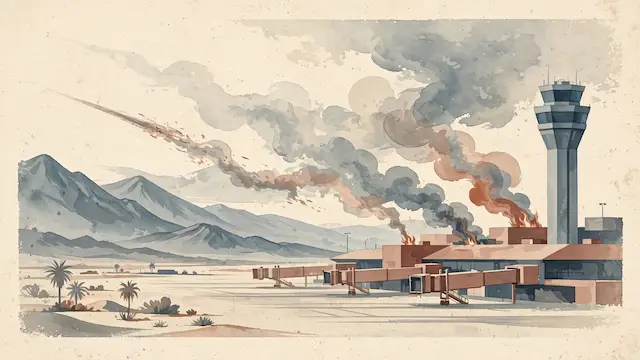
Saudi Arabia has invested heavily in advanced weaponry, yet recent deadly strikes, including one targeting Riyadh's airport, have exposed weaknesses in its ability to counter ongoing Houthi assaults. The attack on Riyadh's airport on Saturday was the deadliest in Saudi Arabia in over a decade, killing 13 and injuring over 300, prompting diplomatic missions to warn their citizens against traveling to the airport. These repeated drone and missile strikes have also damaged the Kingdom's image as a stable country.
Houthi attacks are increasing pressure on Saudi air defense systems and likely depleting interceptor missile stockpiles, amid global shortages of such munitions. While Saudi forces have successfully intercepted some projectiles, others have hit targets like Riyadh airport and oil facilities. Andreas Krieg, an analyst at MENA Analytics, stated that even a multi-layered defense system combining Patriot and THAAD missiles, fighter jets, and sensors cannot provide complete protection over a country the size of Saudi Arabia, which requires constant defense of numerous vital areas.
Saudi Arabia has limited domestic military industries, relying on massive arms imports and foreign personnel. The Houthi escalation coincides with a resurgence of Yemen's civil war, where a Saudi-led coalition backs the internationally recognized government against the rebels. Security analyst Thomas Juneau suggested the Houthis aim to "change the rules of the game," retaliating for Saudi airstrikes on Sanaa. The Houthis, with tens of thousands of experienced fighters, have long posed a threat to Gulf states, with recent attacks extending to Israel.
Krieg noted that the Riyadh airport is crucial to Saudi Arabia's Vision 2030 plan to transform the capital into a global hub, a fact the Houthis recognize. Disruptions to the airport, while not impacting military capabilities, impose significant economic and psychological burdens. The recent airport casualties were the highest in Saudi Arabia since a 2015 ISIS attack on a Shia mosque in Qatif killed 21. The attack occurred just before major conferences and entertainment events were set to begin in the Kingdom. Diplomatic missions expressed dissatisfaction with the lack of regular briefings from Saudi officials, and several embassies advised their citizens to avoid the airport. German Minister Katherina Reiche was delayed in Riyadh due to the attack, impacting her participation in energy week events.
Mentioned
The same event, reported separately by each outlet. Open a few to compare what different newsrooms emphasize — and what they leave out.
Left 1Centre 2Right 4Haredi 1Arab 1








Not the same event — other stories that share this one’s people, places, or theme: background, reactions, and follow-ups.


