Israeli Minister Vows to Pursue Death Penalty for Palestinian Prisoners
Translated & summarized from Al-Shams by baba
Israeli National Security Minister Itamar Ben-Gvir pledged to advance the death penalty for Palestinian prisoners and worsen their prison conditions. The Knesset passed a law in March 2026 imposing capital punishment for killing Israelis, which took effect in May and faces international criticism. Ben-Gvir has also implemented stricter prison policies, including reduced privileges, and has publicly threatened prisoners.
The story in 5 lines · by baba
- Israeli National Security Minister Itamar Ben-Gvir vowed to continue efforts to implement the death penalty for Palestinian prisoners.
- The Knesset approved a law in March 2026 mandating the death penalty for Palestinians convicted of killing Israelis.
- The law, effective since May, has drawn criticism from human rights groups for being discriminatory.
- Ben-Gvir has also implemented stricter prison conditions, reducing privileges for Palestinian detainees.
- He recently released a video threatening a specific Palestinian prisoner, Hassan Salameh.
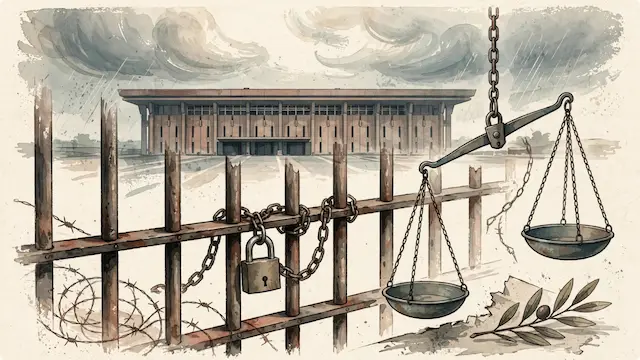
Israeli National Security Minister Itamar Ben-Gvir has vowed to continue efforts to enact and implement the death penalty for Palestinian prisoners, threatening to intensify their detention conditions as part of his policy to restrict prisoners within Israeli jails. "I will continue to work to approve the execution of prisoners, and my policy will ensure prisoners have a hellish life," Ben-Gvir stated, reflecting his commitment to harsher penalties and measures against Palestinian detainees.
The minister's remarks follow the Israeli Knesset's approval on March 30, 2026, of a law mandating hanging as capital punishment for Palestinians convicted of killing Israelis in attacks classified as terrorism by Israeli authorities. This law, which includes military court rulings in the West Bank, went into effect last May. It has drawn widespread Palestinian and international criticism, with human rights organizations warning of its discriminatory nature and potential application against Palestinians but not Israelis convicted of similar crimes. Concerns have also been raised about fair trial guarantees and the right to appeal.
This legislation is part of the push led by Ben-Gvir and his party, Otzma Yehudit, for more severe punishments for Palestinian prisoners, with the death penalty being a primary political demand. Ben-Gvir's actions have not been limited to advocating for the death penalty; he has repeatedly announced a policy of tightening detention conditions, including reducing privileges and increasing restrictions within prisons.
In September, Ben-Gvir released a video showing him threatening Palestinian prisoner Hassan Salameh, who is serving a sentence for attacks in 1996. Ben-Gvir told Salameh he wanted to kill him and boasted about improving detention conditions. These statements and practices have drawn Palestinian criticism, with warnings of escalating violations within prisons and worsening prisoner conditions amid frequent complaints of inadequate medical care, food, and poor detention environments.
These policies coincide with Palestinian and international calls to guarantee prisoners' rights and provide protection, warning of the legal and humanitarian repercussions of implementing the death penalty and expanding punitive measures within Israeli prisons.