
Iran-Linked Influence Operation Used AI to Publish Fake News Articles
Translated & summarized from i24NEWS by baba
OpenAI has exposed an Iranian influence operation that used its AI models to publish nearly 100 articles on news sites under fake journalist bylines. The operatives, based in Iran and using VPNs, created multiple personas and used ChatGPT to generate and refine content on topics including Israeli politics and the US-Iran conflict. Some articles appeared on sites with significant social media followings, including Middle East Monitor and Daily Kos, while others targeted Iran International. The operation also involved generating social media comments to shape narratives.
The story in 5 lines · by baba
- Iranian operatives used OpenAI's AI to publish nearly 100 articles under fake journalist names on news websites.
- The operation, revealed by The Washington Post, involved AI generating and refining content on topics like Israeli politics.
- OpenAI blocked accounts linked to the operation and noted the use of VPNs to hide their Iranian origins.
- Articles appeared on sites like Middle East Monitor and Daily Kos, with some targeting Iran International.
- The operatives also used AI to generate social media comments to influence public opinion.
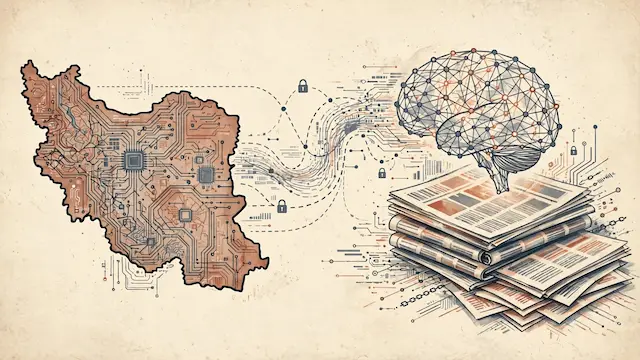
OpenAI revealed on Thursday that Iranian operatives used its AI models to publish nearly 100 articles on news websites under the bylines of non-existent journalists. The operation, first reported by The Washington Post, involved AI acting on human instructions. OpenAI has blocked accounts linked to the operation, which used VPNs to mask their Iranian origins.
The operatives created seven Western-sounding personas, primarily American, and then used ChatGPT in Persian to refine English articles about the US-Iran conflict. These articles were adapted for submission to various websites, with AI drafting cover letters to editors. Approximately 100 articles were republished or distributed across more than 12 websites from July 2025 to the present, including pieces on Israeli politics.
Some articles were sophisticated and not overtly anti-Israel. For instance, one byline, "Ervin Hawkins," was presented as an American freelance writer and anti-war activist. Another, "Michael Harrison," had a full biography created for it. "Noah Lemington" analyzed the Haredi draft crisis and the stability of the Netanyahu government for International Policy Digest, while "Hoskins" wrote for Modern Diplomacy about the entry ban of Itamar Ben-Gvir to France. While "Hoskins" criticized Ben-Gvir and the lack of US pressure on him, the author also expressed explicit support for Israel's security.
Another article in LA Progressive questioned whether Jared Kushner's business ties in the Gulf influenced US policy toward Iran. The outlets that published these articles were not leading media organizations but some had significant social media followings. Middle East Monitor, based in London with nearly two million Facebook followers, published at least 21 articles under four different fictional bylines identified by OpenAI. The site stated it removed AI-generated content and is reviewing its submission processes. Articles also appeared on Daily Kos, a US Democratic Party-affiliated site, in a community section not subject to editorial review.
These texts, submitted under false identities, reached readers through recognizable websites and were sometimes promoted on social media. The operatives also used ChatGPT to generate social media comments portraying the US as aggressive, Israel as an unreliable ally, and Iran as a victim. Some comments praised the articles they had infiltrated. Part of the operation targeted Iran International, a Persian-language outlet critical of the Tehran regime, with dozens of hostile comment sets generated by ChatGPT in response to its posts.
Additionally, an article by "Sofia Gonzalez" in LA Progressive and CounterPunch claimed Netanyahu pushed Trump into war and that Tehran welcomed the attacks. The article itself received no comments.
Mentioned
The same event, reported separately by each outlet. Open a few to compare what different newsrooms emphasize — and what they leave out.
Centre 2Right 1Other 1




Not the same event — other stories that share this one’s people, places, or theme: background, reactions, and follow-ups.