Southern Democratic candidate says the Negev needs partnership, not scapegoating

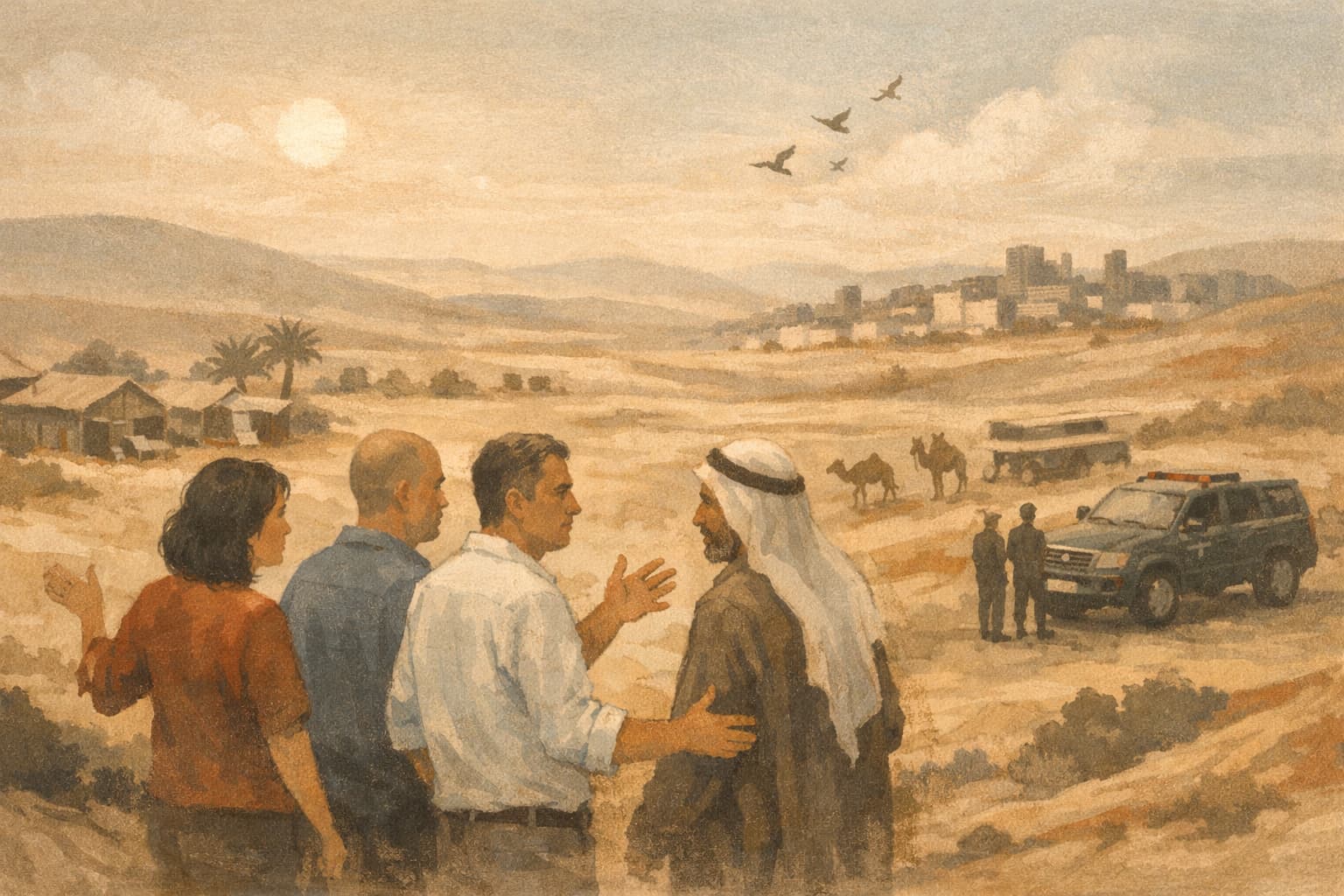
Avi Dabush, the only candidate from southern Israel in the Democratic Party primaries, toured the Negev on Tuesday with three other contenders, Somia Bashir, Moran Michel and Moshe Redman. The trip, which began in the unrecognized Bedouin village of al-Fakhri south of Lehavim and continued through Tel Arad, Arad and Beersheba, was meant, he said, to meet residents directly rather than just read online posts. Dabush, who sees himself as a long-time representative of the region, said he hopes to use the election to change both the political system and the Negev.
Dabush, a founder of the Negev Council, linked the current Bedouin protest against house demolitions in unrecognized villages to broader state policy. He said the government’s May 2024 plan to regulate Bedouin settlement “does not work,” argued that people have lived in the area for decades, and called the demolitions in Tel Arad deeply painful. He said the state displaced Bedouin families from the Nabatim area and that replacing them with a Jewish settlement was, in his view, “strange to the point of racist.” He also criticized Itamar Ben Gvir, saying he had seen him “amplify himself” on the issue.
Addressing crime and personal safety in the Negev, Dabush said poverty and crime go together worldwide and that high unemployment and poor education in Bedouin society create fertile ground for organized crime. He said stronger enforcement and weapons collection are needed, and credited the previous “change government” more than Ben Gvir. He added that the most effective approach came from Omer Bar-Lev and Yoav Segalovich, who combined policing, new police stations, weapons seizures and investment in prosperity, while also insisting that the community itself must take responsibility, including selecting school leaders and teachers by merit and rebuilding informal education.
Dabush said residents of Beersheba rightly want security, but warned that blaming Bedouins as a community only deepens hatred and alienation. He recalled that Jews were historically on the receiving end of collective blame and said the Negev needs long-term inclusion and opportunity, rooted for him in the Jewish value of “love the stranger.” He also said he has worked with MK Naama Lazimi to build a “peripheries headquarters,” targeting 40 local authorities, some in the south, to double Democratic votes in each city. He cited 2022 results of 181 votes for Meretz and Labor in Ofakim and about 300 in Sderot, and said the team aims for 400 and 600 respectively.
Dabush argued that the right’s dominance in the south is weakening, citing a Channel 12 poll in which 42 percent of Likud voters said they would not back Benjamin Netanyahu this time. He tied that shift to October 7, the draft law crisis and the Qatargate affair, saying the October 7 attack was not only Israel’s greatest failure but also the refusal to take responsibility afterward. He said he spent 35 hours in a safe room in the Gaza border area and lost hundreds of friends, and called reports that Hamas is rebuilding tunnels beyond the yellow line a “shocking failure.” He also rejected calls from figures in his own camp to sever ties with Arab parties, saying the massacre exposed Bedouin and Jewish shared fate.



