How to Spot a Bubble, What Rate Cuts May Come Next, and Whether the Bank of Israel Makes Money

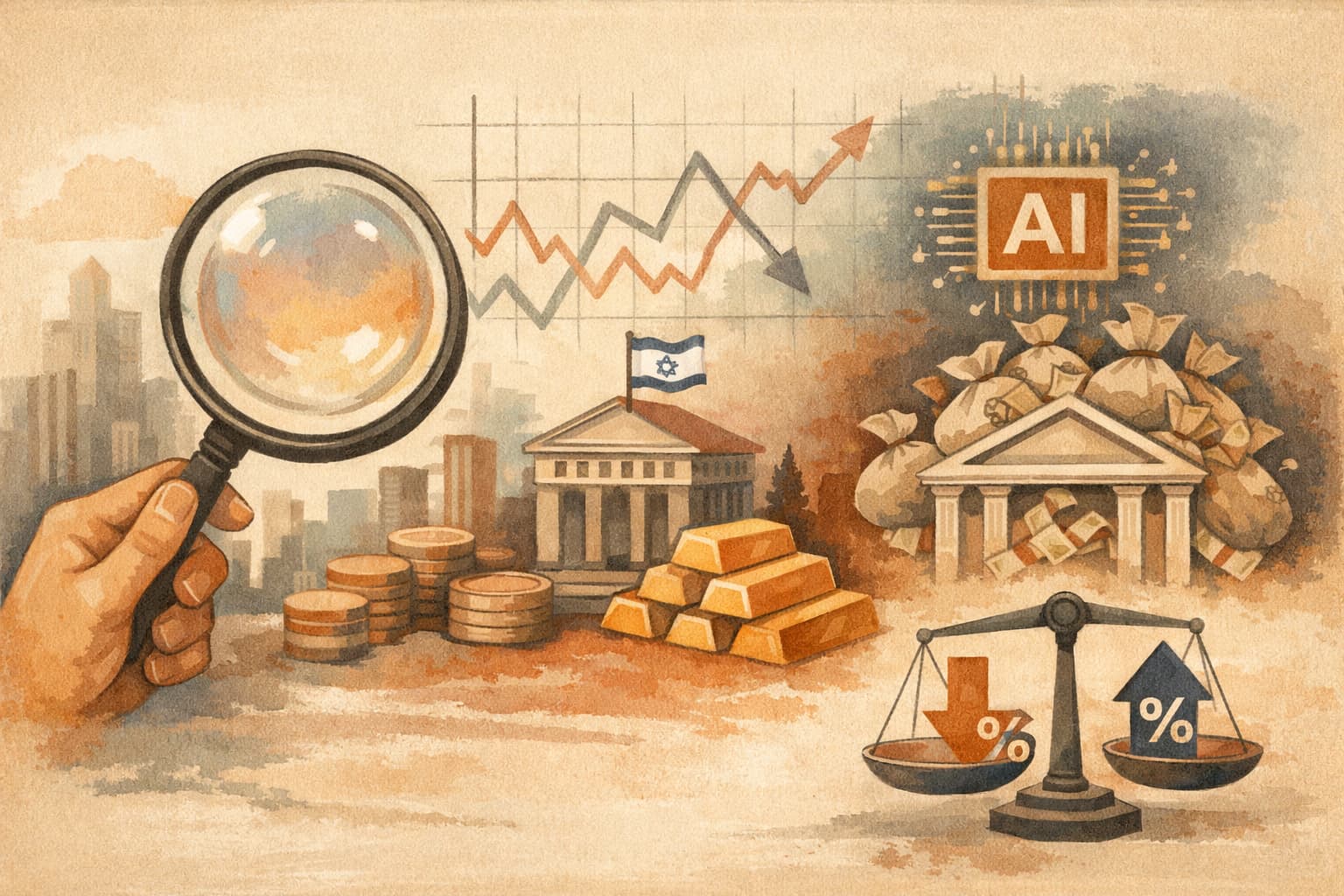
Episode 385 of the Calcalist podcast "Money Engines," featuring chief economist and strategist Uri Greenfeld of Agram Leaders, was devoted entirely to listener questions. The discussion opened with the most timely issue, how much Israel’s interest rate may fall over the coming year. Greenfeld said nobody knows the exact answer, not even the Bank of Israel, but markets are already pricing in two to three additional cuts of 0.5% each over the next year.
The hosts also addressed whether the Bank of Israel has real economic significance when it records losses or gains from buying dollars. They explained that the bank usually does not lose money, because the dollars it purchases are invested in bonds, stocks and other assets that generate returns over time, so the portfolio can remain profitable even if the exchange rate moves.
A major segment focused on how to identify a bubble. The episode outlined three recurring traits seen in historic bubbles, from the dot-com boom to the housing bubble, rapid price increases that detach from real profits, an inflow of new money driven by FOMO, and high leverage. The same framework was then applied to the AI market. The episode also included a tribute to Alan Greenspan, one of the world’s most influential economists, who died this week at the age of 100.
The show’s structure was listed as follows: opening and tribute to Greenspan, interest-rate outlook and listener questions, governors’ performance, Bank of Israel reserves and wage measurement, U.S. debt and the dollar’s role as the dominant global currency, AI bubble risks and figures, and an escapism segment.

