NASA Readies $500 Million Swift Rescue Mission to Save Aging Space Telescope

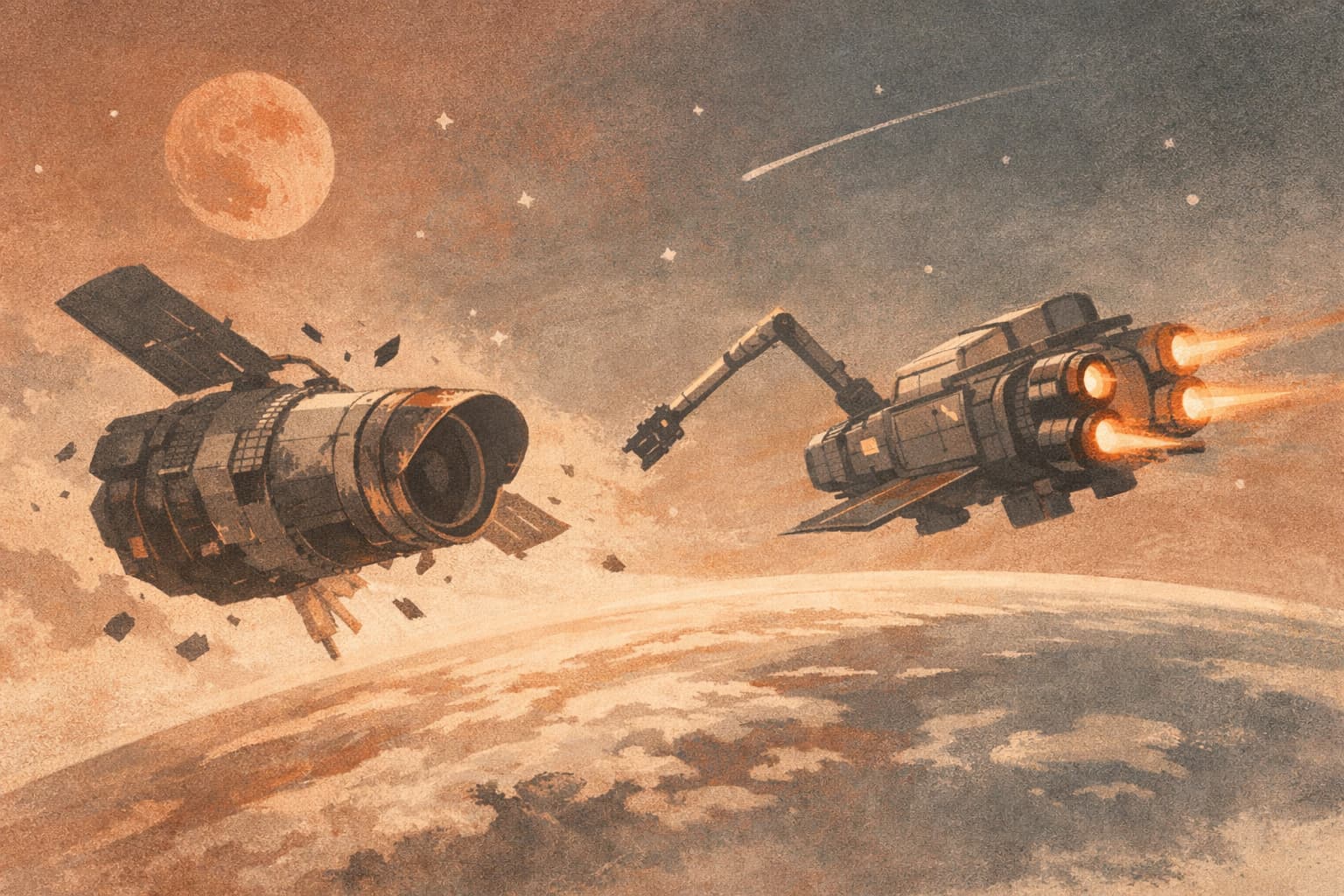
The spacecraft and its launch have cost more than $500 million in total, so NASA decided in September 2025 to contract Katalyst Space Technology, a company that has not yet launched anything to space, to build a rapid-response rescue vehicle. Katalyst developed the Link spacecraft in just nine months, far faster than the usual two-year development cycle. Link, weighing 425 kilograms, will spend several weeks approaching Swift, using 16 small thrusters for fine maneuvering and three robotic arms to dock with the telescope, which was never designed to accept an external attachment.
If the rendezvous succeeds, Link will use its three main engines to slowly raise Swift back to a 600-kilometer orbit. The entire transfer is expected to take up to two months, and, in the best-case scenario, Swift could resume operations before the end of the year, according to John Nousek of Penn State, who manages the telescope’s operations. After the mission, NASA will assess whether Link can be used for similar future tasks, depending on how much fuel remains. At the end of its own life, Link will be directed into an atmospheric reentry so it does not add to space debris.
The launch itself is also unusual. NASA chose Northrop Grumman’s Pegasus, an air-launched solid-fuel rocket that carries small payloads to low Earth orbit and has largely fallen out of use. Pegasus was last launched in 2021 and, after about 30 years of service, this mission is expected to be its final one. After the spacecraft was mounted on the rocket and the rocket loaded onto the carrier aircraft, the plane flew to the Marshall Islands in the Pacific. The launch window opens this coming Saturday from a U.S. missile base there.
Swift has been a major scientific success despite its original two-year design life. It was built to quickly point at short gamma-ray bursts, brief and extremely powerful flashes that usually come from violent neutron star mergers. The telescope, later renamed for mission scientist Neil Gehrels after his death in 2017, has detected more than 2,000 such events and helped scientists show that neutron-star collisions can create heavy elements such as gold and platinum. Brad Cenko, the telescope’s lead scientist at NASA Goddard, said Swift was designed to study bursts that release in seconds more energy than the Sun produces over its entire lifetime. Its instruments still work well, making orbital decay the only major threat.


