
Israeli Analysts Warn Nobel Peace Prize for Navi Pillay Signals Israel's Growing International Isolation
Translated & summarized from Arab48 by baba
Israeli analysts warn that the Nobel Peace Prize awarded to former ICC President Navi Pillay signals Israel's growing international isolation and precarious future. Professor Yedidia Stern highlighted the threat of economic sanctions from Europe and a shifting U.S. public opinion. Journalist Gideon Levy criticized Israeli Foreign Minister Gideon Sa'ar's reaction to Pillay's award, drawing parallels to Nazi propaganda and accusing Israel of self-isolation by refusing to accept criticism regarding its actions in Gaza.
The story in 5 lines · by baba
- Nobel Peace Prize for Navi Pillay signals Israel's worsening international standing and future threats, analysts warn.
- Professor Yedidia Stern cited potential European sanctions and a changing U.S. public opinion as major concerns.
- Stern described two Israeli camps: one optimistic about security and economy, the other facing harsh realities.
- Journalist Gideon Levy criticized Israeli Foreign Minister Sa'ar's reaction to Pillay's award, comparing it to Nazi propaganda.
- Levy argued Israel is self-isolating by refusing criticism and blaming the world for antisemitism.
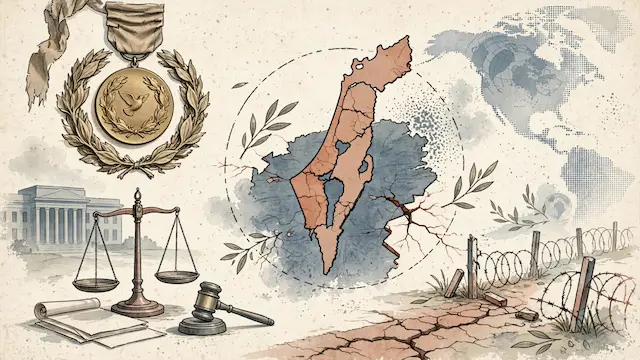
Israeli newspapers on Sunday carried analyses warning that the awarding of the Nobel Peace Prize to South African judge Navi Pillay, former president of the International Criminal Court, underscores Israel's deteriorating international standing and precarious situation. Professor Yedidia Stern, head of the Institute for Jewish People Policy, stated that Pillay's recognition, implicitly endorsing the accusation of genocide against Israel, serves as a wake-up call threatening Israel's future. Stern described two opposing camps within Israel: one believing the security and economic situation is strong, citing the shekel's strength and high international happiness rankings, and another facing a harsh reality of an unfinished war, lack of political settlement, unaddressed pre-October 7 failures, and internal societal divisions threatening economic and security stability, even risking civil war.
Stern urged unity to confront Israel's impending dramatic international isolation, which he believes will impose a severe and potentially fatal new reality on all Israelis. He highlighted the threat of severe economic damage from potential sanctions by European trading partners, noting that Britain and 11 other European nations are planning sanctions targeting the settlement economy, which would inevitably impact major Israeli companies due to the interconnectedness of the Israeli economy. He also warned of a creeping, spontaneous boycott by international businesses fearing association with sanctions, even from Israel's allies.
Furthermore, Stern expressed concern over the shifting U.S. stance, stating that current American support is merely tactical, with a growing segment of the American public, including Republicans and evangelicals, turning away from Israel. He noted that support for Palestinians is increasing, portraying them as the underdog. Stern concluded that Israel is on a slippery slope toward a significant economic, political, and eventually security defeat, especially after a potential U.S. administration change in two years, warning against complacency and emphasizing the rapid nature of this decline, referencing the October 7 Hamas attack.
Journalist Gideon Levy, writing in Haaretz, criticized Israeli Foreign Minister Gideon Sa'ar's reaction to Pillay's award, comparing Sa'ar's rhetoric to that of Nazi Propaganda Minister Josef Goebbels. Levy lauded Pillay as a role model dedicated to human rights and international law, contrasting her with Sa'ar's dismissive reaction. He drew parallels between the Nazi regime's attacks on Nobel laureate Karl von Ossietzky and Israel's current accusations of antisemitism against Pillay, arguing that Goebbels would be more likely to be disturbed by Pillay's integrity than pleased by Israel's actions. Levy suggested that the world sees disturbing similarities between 1930s Germany and contemporary Israel, a historical irony he deemed shameful. He defended Pillay, stating she condemned Hamas's October 7 atrocities and is not antisemitic or anti-Israel but a woman of conscience. Levy asserted that Sa'ar's reaction isolates Israel further, making it appear to reject the international community and its values, particularly in its response to criticism regarding the Gaza conflict, where Israel allegedly refuses to acknowledge responsibility or criticism, instead blaming the world for antisemitism.
Mentioned
The same event, reported separately by each outlet. Open a few to compare what different newsrooms emphasize — and what they leave out.
Right 1Haredi 1Arab 1Other 3





Not the same event — other stories that share this one’s people, places, or theme: background, reactions, and follow-ups.
