
Boy George Faces Backlash, Threats for Pro-Israel Song
Translated & summarized from Channel 9 by baba
British singer Boy George is facing backlash, including threats and canceled projects, for his song "We Will Dance Again," dedicated to victims of the October 7th Hamas attack. The 65-year-old artist stated he has been ostracized by parts of the music industry but remains defiant in his support for Israel. Despite professional difficulties, including finding musicians for his upcoming concerts, Boy George is scheduled to perform in Tel Aviv in November.
The story in 6 lines · by baba
- Boy George faces threats and industry ostracism for his pro-Israel song "We Will Dance Again."
- The singer's song "We Will Dance Again" is dedicated to victims of the Hamas attack on the Nova festival.
- Boy George reported canceled projects, lost friends, and professional boycotts after the song's release.
- He stated that he received threats and was even uninvited from a friend's memorial service.
- Despite the backlash, the 65-year-old artist plans to perform in Tel Aviv in November.
- Boy George described the song as an emotional statement, not a political career move.
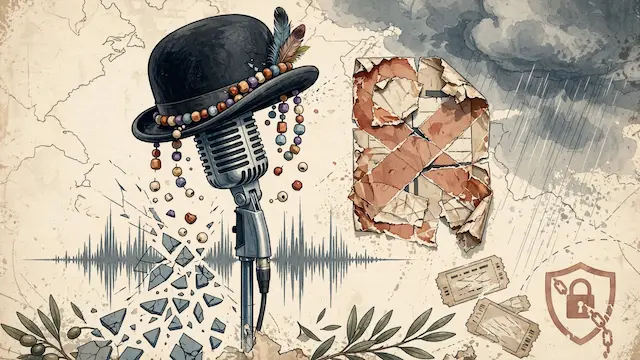
British singer Boy George has faced significant professional and personal repercussions after releasing the song "We Will Dance Again" in July 2026, dedicated to victims of the Hamas attack on the Nova festival. The 65-year-old artist, once a symbol of self-expression, found himself ostracized by parts of the music industry, with former associates distancing themselves, joint projects canceled, and collaborations refused. Boy George revealed in an interview with Israeli TV channel N12 that he has received threats and experienced boycotts, even having an invitation to a friend's memorial service rescinded.
"People just stop calling you and act like you don't understand why they're not calling anymore," Boy George stated, expressing his hurt but firm stance against apologizing for the song or retracting his support for Israel. He declared, "I just wrote a song. Screw Gen Z, let them hate me." The situation is particularly striking given his history of advocating for human rights and the LGBTQ+ community, contrasting with current accusations of fascism and support for genocide leveled against him for a song that addresses the October 7th attacks and Israel's right to self-defense.
Boy George, whose real name is George Alan O'Dowd, rose to fame in the 1980s as the frontman for Culture Club. His connection to Jewish culture spans decades, with childhood friendships and participation in Jewish holidays. The October 7th attack deeply affected him, causing what he described as "real trauma." He found the denial of the events by some unimaginable. "We Will Dance Again" was inspired by a survivor of the Nova festival and aims to be an emotional statement about the right to live and defend oneself, with a central lyric stating, "You say 'genocide,' I say 'war.'"
Following the song's release, Boy George reported that planned performances and collaborations were dropped, and relationships with some acquaintances ended abruptly. He expressed frustration with what he perceives as performative political stances from individuals previously uninterested in politics, now vocal when supporting Israel carries professional risks. He attributes some of the music industry's silence to the influence of Generation Z listeners and promoters who fear losing favor with this demographic.
His role as King Herod in a London production of "Jesus Christ Superstar" was also put on hold, with his manager, Paul Kemsley, citing the need for the production to remain the focus. Additionally, Boy George had a falling out with his label head, Tony Pontius, over the song's release, with Boy George calling Pontius a coward for not wanting to be associated with it. Despite facing difficulties finding musicians willing to perform with him in Israel, Boy George is proceeding with his scheduled concerts in Tel Aviv on November 4th and 7th, the latter dedicated to the survivors and victims of the Nova festival. He stated that support for friends should not be treated as an extraordinary act requiring thanks.
Mentioned
The same event, reported separately by each outlet. Open a few to compare what different newsrooms emphasize — and what they leave out.
Centre 3Other 1




Not the same event — other stories that share this one’s people, places, or theme: background, reactions, and follow-ups.
