
Abraham Accords Aviation Clause May Yield Millions for Flydubai Passengers
Translated & summarized from Israel Hayom by baba
Passengers of a Flydubai flight that experienced a near-crash are gearing up for a multi-million dollar lawsuit against the airline and other parties, leveraging a six-year-old aviation security agreement linked to the Abraham Accords. The agreement mandates mutual protection against unlawful acts and adherence to international security standards. Legal action is being organized by around 100 passengers, who may claim hundreds of millions of dollars. The case also questions the airline's vetting of its co-pilot, Hammam Al-Hamami, and the extent of state oversight under the aviation pact.
The story in 6 lines · by baba
- Flydubai flight passengers are preparing a lawsuit worth hundreds of millions of dollars.
- The legal action will utilize a six-year-old aviation security agreement from the Abraham Accords.
- The agreement mandates mutual protection against unlawful acts and adherence to international security standards.
- Passengers question the airline's vetting of co-pilot Hammam Al-Hamami, who has a reported extremist background.
- The lawsuit targets Flydubai, Israeli entities, and foreign authorities.
- The case tests airline responsibility and inter-state security commitments.
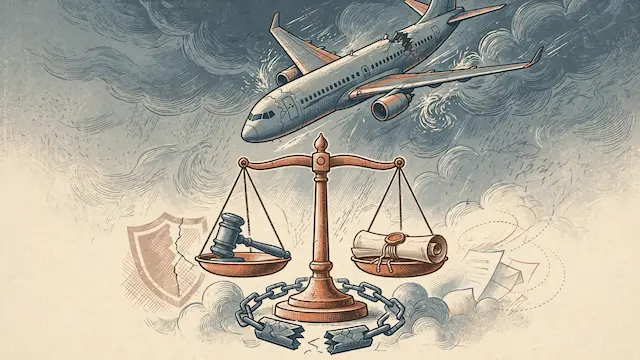
Passengers from a Flydubai flight that narrowly avoided a crash en route to Israel are preparing for extensive legal action against the airline and other entities in Israel and abroad. Beyond the airline's direct liability, a key element in the upcoming legal battles is a six-year-old aviation services agreement signed following the Abraham Accords. An examination of the agreement's text on the Foreign Ministry website reveals a detailed chapter on aviation security, outlining mutual commitments to protect aircraft, passengers, and crews from unlawful acts.
The "aviation security" clause in the agreement stipulates that protecting civil aviation from unlawful interference is an integral part of the signatory states' obligations, requiring adherence to International Civil Aviation Organization (ICAO) security standards. A central provision mandates appropriate measures for screening passengers, crew, baggage, and cargo. The agreement allows for requests for special security measures and clarifies that flight security relies on mutual international commitments, not solely on airlines' internal procedures.
Questions surrounding the co-pilot, Hammam Al-Hamami, an Omani citizen reportedly dismissed from an Omani airline due to extremist views, intensify the legal focus. Investigations are underway to determine if authorities were aware of his background and if a preliminary check should have revealed the risk. Further scrutiny will examine whether complementary security arrangements exist between the countries regarding the nationality and security background of flight crews, especially given reports that Flydubai allegedly committed to restricting the deployment of citizens from certain nations. Violating such a commitment raises serious questions about responsibility and oversight.
Approximately 100 passengers have already authorized legal representation, with potential claims against Flydubai, Israeli entities, and foreign authorities estimated to reach hundreds of millions of dollars. The legal fight may unfold on multiple fronts. While the airline's direct liability for passenger damages is a primary concern, complex claims regarding oversight, security standards, and the implementation of commitments related to this route will also be examined. The aviation services agreement creates mutual state obligations but does not necessarily grant individual passengers the right to sue for compensation directly. However, its provisions could support claims of breached duty of care and negligence. As more details emerge about the co-pilot's background checks, the information held by authorities, and the inter-state commitments, the question of responsibility will become clearer. Six years after the Abraham Accords, this incident tests not only airlines but also security commitments.
Mentioned
The same event, reported separately by each outlet. Open a few to compare what different newsrooms emphasize — and what they leave out.
Right 1Other 2


Not the same event — other stories that share this one’s people, places, or theme: background, reactions, and follow-ups.




