
Israel Scraps $1 Billion Apache Helicopter Deal Amid Budget Crisis
Translated & summarized from Calcalist by baba
Israel has lost a $1 billion deal to acquire 12 Apache attack helicopters from the U.S. due to a funding dispute between the Ministries of Defense and Finance. The deadline for the deal, crucial for enhancing the Air Force's capabilities, expired without resolution. This failure highlights a severe budget crisis impacting defense procurement and potentially jeopardizing other major acquisitions. Defense officials are critical of the process, while the Finance Ministry questions the necessity of the helicopters.
The story in 6 lines · by baba
- Israel missed a $1 billion deadline to purchase 12 Apache attack helicopters due to internal budget disputes.
- The failure to secure the helicopters highlights a severe, unmanaged budget crisis between the Defense and Finance Ministries.
- The current Apache helicopters in service are over 35 years old, with the new models offering advanced capabilities.
- The core of the dispute involves $288 million for which no future budget source could be identified.
- This failure may jeopardize other significant defense procurement deals, including refueling and transport aircraft.
- Officials expressed frustration, calling the process "madness" and suggesting it warrants investigation.
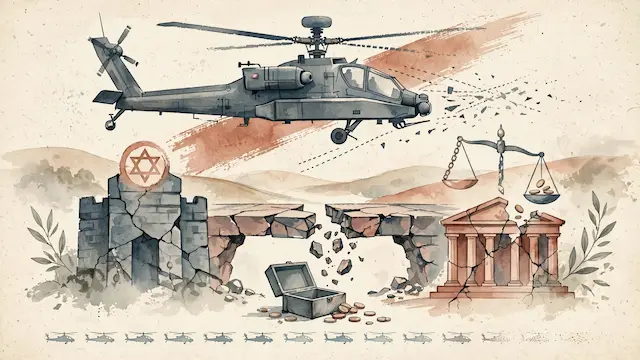
Israel has lost the opportunity to purchase 12 Apache attack helicopters from the United States due to ongoing budget disputes between the Ministries of Defense and Finance. The Ministry of Defense had requested three extensions from the U.S. Department of Defense for the deal, valued at approximately $1 billion, but neither ministry could finalize the necessary funding before the final deadline expired on October 7, the third anniversary of the Hamas attack.
This failure to secure the helicopters, which are intended to enhance the Air Force's readiness and response capabilities, particularly in light of lessons learned from the October 7th attacks, highlights a severe, unmanaged budget crisis. This crisis has already led to significant debts to defense industries and delays in urgent weapons procurement, with potential operational consequences.
Senior defense officials expressed frustration, likening the situation to that of a third-world country and calling the procurement process a "madness" that warrants investigation. The current Apache helicopters in the Air Force service are over 35 years old, with the most advanced acquired two decades ago. The new AH-64E models feature advanced radar, sensors, and fire control systems, improving situational awareness and enabling coordination with unmanned aerial vehicles.
The core of the dispute centers on $288 million, a third of the deal's cost, for which no future budget source could be identified due to "numerator" limitations. This prevented the Ministry of Defense from committing to the purchase without securing full funding upfront. The deal was meant to be integrated into the Pentagon's existing order with Boeing, but Israel's delay stalled the U.S. military's own procurement plans.
This failure could jeopardize other significant procurement deals, including two KC-46 refueling aircraft ($500 million) and six additional CH-53K transport helicopters ($1 billion). These potential failures stem from uncertainty surrounding a multi-year NIS 350-400 billion defense budget increase announced by Prime Minister Benjamin Netanyahu, intended to offset a potential reduction in U.S. military aid after 2028.
Efforts to resolve the budget deadlock, including a meeting between Netanyahu and Opposition Leader Yair Lapid to approve budget adjustments during an election period, have so far failed. Meanwhile, officials in the Ministry of Finance have shifted blame to the defense establishment, claiming it altered the procurement plan and disregarded budget constraints. Some in the Finance Ministry also question the operational necessity of the new Apache helicopters, suggesting that drones and unmanned aerial vehicles could fulfill similar roles at a lower cost.
Mentioned
The same event, reported separately by each outlet. Open a few to compare what different newsrooms emphasize — and what they leave out.
Other 2

Not the same event — other stories that share this one’s people, places, or theme: background, reactions, and follow-ups.


