Near-Disaster on Flydubai Flight Highlights Security Failures
Translated & summarized from Maariv by baba
Attorney Uriel Lin criticized security failures surrounding Flydubai flight 1073, comparing them to the lapses before the October 7th attacks. He argued that relying on flawed assessments and neglecting basic checks on pilots endangered passengers. Lin stated that the Ministry of Transportation, in coordination with security agencies, is responsible for passenger safety and called for accountability for the negligence that nearly led to disaster.
The story in 5 lines · by baba
- Attorney Uriel Lin criticized security failures on Flydubai flight 1073, comparing them to October 7th lapses.
- He warned that unknown foreign pilots pose a security risk, citing 9/11 as precedent for suicide attacks.
- Lin described the oversight of pilots' backgrounds on the Flydubai flight as 'pathetic'.
- He stated that the Ministry of Transportation is largely responsible for passenger safety on flights to Israel.
- Lin called for accountability for officials whose flawed thinking endangered passengers.
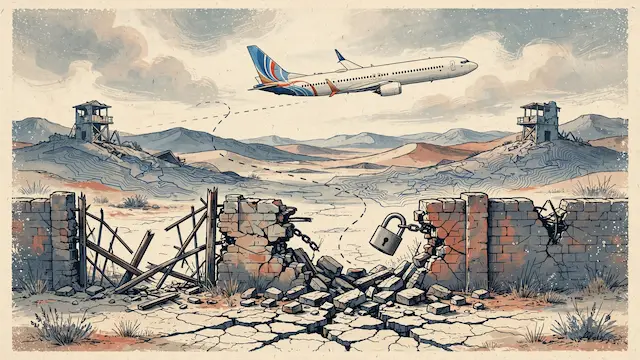
An article by attorney Uriel Lin criticizes the security lapses surrounding Flydubai flight 1073, drawing parallels between the incident and the failures leading up to the October 7th attacks. Lin argues that the near-disaster exposed a profound negligence in ensuring personal safety, which he believes cannot be achieved by relying on flawed assessments.
He highlights the vulnerability of passengers whose lives are entrusted to non-Israeli pilots, unknown to the authorities. In the context of global terrorism, Lin asserts that the assumption that pilots would not risk their own lives is invalid, citing the 9/11 attacks as proof of individuals willing to commit suicide attacks. He further warns that a pilot could hijack a plane and fly it to Iran, becoming a national hero there while endangering Israel.
Lin draws a direct comparison between the security system's performance before October 7th and the Ministry of Transportation's handling of the Flydubai flight incident. In both cases, he points to a superficial thought process and a failure to address fundamental security questions. He criticizes the lack of basic checks on the pilots' identities and backgrounds for the Flydubai flight, deeming the oversight in this critical area as 'pathetic'.
The author contends that there is a significant deficiency in the ability to think correctly and provide necessary personal security. He states that responsibility for passenger safety on flights to Israel largely rests with the Ministry of Transportation, which can coordinate with the Shin Bet and Mossad. Lin concludes that citizens are entitled to personal security, which is undermined by complacent, worry-dispelling assessments that lead to the dismissal of any contradictory information. He calls for accountability for those entrusted with passenger security who, due to arrogance or flawed thinking, brought the country to the brink of disaster.
Mentioned