
Houthi Missile Hits Riyadh Passenger Terminal, Causing Casualties
Translated & summarized from 0404 by baba
A Houthi missile struck the passenger terminal at King Khalid International Airport in Riyadh, Saudi Arabia, causing numerous casualties. This attack follows a similar deadly strike on the same airport two days earlier. Emergency services are responding, and hospitals are preparing for an influx of injured individuals, some in serious condition. The repeated targeting of civilian airports highlights the escalating regional conflict and the threat posed by Iran-backed Houthi rebels.
The story in 6 lines · by baba
- A Houthi missile hit the passenger terminal at Riyadh's King Khalid International Airport, causing casualties.
- The attack occurred just two days after a previous deadly strike on the same airport.
- Emergency services and hospitals in Riyadh are responding to a significant number of injured individuals.
- Saudi authorities have not yet officially confirmed the exact number of casualties.
- The repeated targeting of civilian airports raises concerns about the escalation of the conflict.
- Houthi rebels, supported by Iran, are believed to be behind the attacks.
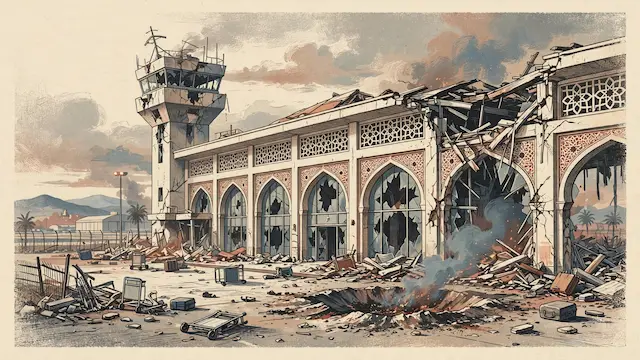
The King Khalid International Airport in Riyadh, Saudi Arabia, was attacked again by a missile fired by Houthi rebels from Yemen, hitting the passenger terminal. Initial reports indicate a significant number of casualties, with emergency services launching a large-scale operation to evacuate passengers and staff. Ambulances rushed to the scene to provide medical aid and transport the injured to hospitals. Saudi authorities have not yet officially confirmed the extent of the damage or the number of fatalities and injuries, but medical sources reported unusual preparations at hospitals, with additional medical teams being urgently called in. Some of the injured are believed to be in serious condition.
This attack follows a deadly strike on the same airport just two days prior, which killed three Saudi civilians, including a pilot, and damaged a passenger plane. The recent attacks, including others on airports in Abha, have raised concerns about civilian aviation facilities becoming primary targets in the ongoing conflict. The repeated strikes on civilian infrastructure highlight the difficulty in preventing such attacks, even with air defense systems.
The Houthi rebels, supported by Iran, continue to use missiles and drones in the regional conflict. The attacks on Saudi airports underscore the threat posed by Iran-backed militant groups to strategic infrastructure across the region, including aviation, energy, and shipping lanes. While the article notes this as a reminder for Israel of the regional dangers posed by Iran-backed groups, it states there is no information indicating direct Israeli involvement or an immediate policy change following the Riyadh attack.
The repeated strikes on civilian facilities demonstrate the growing danger to international aviation. The King Khalid International Airport is a major hub for Saudi Arabia, and attacks on such sites can disrupt flights, damage passenger confidence, and increase security and operational costs. The ongoing attacks present a significant security challenge for Saudi Arabia, especially as it seeks to develop its tourism sector and expand international air travel.
The escalation occurs amid continued fighting in Yemen between the Houthi rebels and the internationally recognized Yemeni government, which Saudi Arabia supports militarily. The Houthis' response has included expanding attacks into Saudi territory, with civilian airports becoming prominent targets. This cycle of attacks and military responses raises fears of further dangerous deterioration in the Middle East.
The same event, reported separately by each outlet. Open a few to compare what different newsrooms emphasize — and what they leave out.
Centre 1Right 1

Not the same event — other stories that share this one’s people, places, or theme: background, reactions, and follow-ups.
