Israel Faces Rising Road Fatalities Amidst Government Failures
Translated & summarized from Zman Yisrael by baba
Israel is experiencing a significant rise in road fatalities, with projections indicating over 450 deaths in 2026, a stark increase from previous years, while Minister of Transportation Miri Regev faces criticism for her handling of the issue. The article also details systemic failures in waste management, leading to frequent and dangerous fires, and highlights the ongoing bird migration season with observations of short-toed eagles in Eilat.
The story in 6 lines · by baba
- Road fatalities in Israel have surged, with projections showing over 450 deaths in 2026, a significant increase from previous averages.
- Minister of Transportation Miri Regev is criticized for her response to rising road deaths and other ministry failures.
- Systemic government failures in waste management are contributing to frequent and dangerous waste fires across Israel.
- A recent large waste fire in Usfiya threatened the Carmel region, highlighting ongoing environmental and safety concerns.
- "Citizens for Clean Air" declared October 11th a "National Suffocation Day" due to air pollution from waste fires.
- The article also touches on the under-visited Muhraka monastery and the ongoing bird migration season.
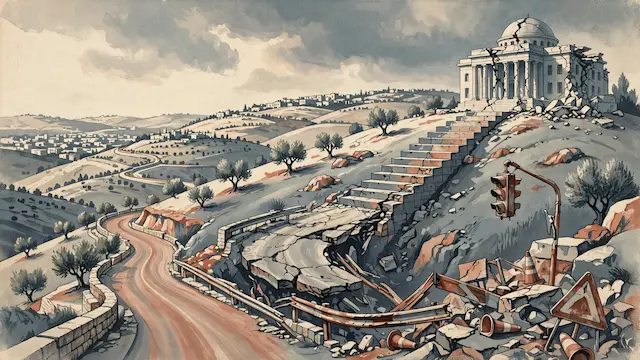
Minister of Transportation Miri Regev has been attempting to distance herself from responsibility for security lapses on foreign flights, which nearly endangered 174 Israelis. The article criticizes Regev and the Netanyahu government for a significant increase in road fatalities during her tenure. While an average of 351 people died annually in road accidents in the decade preceding Regev's appointment, this number rose to 361 in 2023 and is projected to reach 450 in 2026, with an additional 300 deaths over the past three years compared to the previous decade. Regev has attributed accidents to driver distraction, such as phone use, and the government has reportedly cut the budget of the National Road Safety Authority. The article also highlights other failures within the Ministry of Transportation, including a year-long vacancy for the CEO of Israel Railways, the dismissal of the chairman of Netivei Ayalon due to alleged resume fraud, and a compromised system for approving disability permits. Furthermore, violence against public transport drivers is rampant, with limited government response.
The article also addresses the issue of waste fires, noting a recent large fire at the Usfiya landfill that threatened the Carmel region. This incident is linked to a broader, systemic government failure in waste management, particularly in Arab communities, and lax enforcement by environmental and police authorities. The Usfiya site was reportedly operating without a permit. "Citizens for Clean Air" declared October 11th a "National Suffocation Day" to draw attention to the issue, stating that 75% of carcinogenic substances in Israel's air come from illegal waste fires. The organization has created a "suffocation map" based on over 23,000 reports of waste fires.
Separately, the article briefly mentions the Muhraka monastery on Mount Carmel as a beautiful but under-visited tourist site, noting its historical significance and scenic views. It also describes the ongoing bird migration season, with a focus on short-toed eagles observed at the Eilat Bird Watching Park. A group of these eagles attempted to migrate south but were forced to return due to unfavorable winds, later successfully taking flight with the aid of a thermal updraft.
Mentioned