West Bank Olive Harvest Sparks Violence Amid Increased Tensions
Translated & summarized from Maariv by baba
The West Bank olive harvest has triggered numerous violent incidents and increased tensions between Palestinians and settlers, despite a significant IDF presence. Palestinians report confrontations, blocked access to groves, and forced displacement, with claims of IDF involvement in some instances. The IDF acknowledged isolated incidents of friction amid the harvest, which is expected to yield a large crop this year.
The story in 5 lines · by baba
- The West Bank olive harvest has led to numerous violent incidents and increased tensions between Palestinians and settlers.
- Palestinians report confrontations, blocked access to their lands, and forced displacement of families.
- The IDF deployed significant forces to secure the harvest but acknowledged isolated incidents of friction.
- Palestinian reports accuse settlers of harvesting their trees and the IDF of using tear gas and blocking access.
- A Bedouin family was reportedly forced to leave their home due to an IDF blockade and severed water supply.
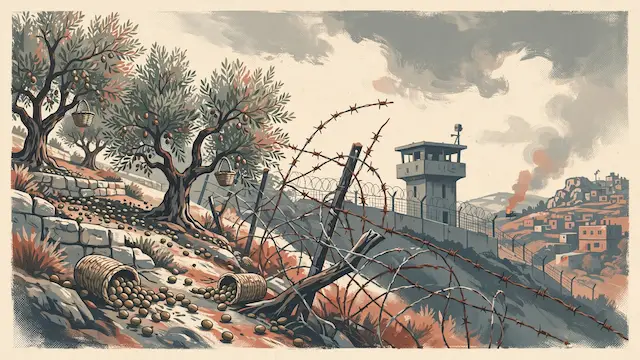
The annual olive harvest in the West Bank has ignited a wave of violent incidents and heightened tensions between Palestinians and settlers, despite increased Israeli military presence. Palestinians report confrontations, blocked access to their lands, and forced displacement of families.
This year's large olive yield, coupled with the establishment of numerous settlements and outposts, some illegal, had led the IDF's Central Command to anticipate significant friction during the harvest. While the military announced preparations and deployed substantial forces to secure the harvest and prevent clashes between far-right activists and Palestinian harvesters, numerous incidents have occurred since the morning.
Palestinian reports claim the IDF is struggling to manage settler violence. In one incident near Qusra, Palestinians arriving at their olive groves encountered settlers harvesting their trees. According to Palestinian accounts, IDF soldiers deployed tear gas grenades that ignited fires in agricultural lands. Palestinians also reported that the IDF fired tear gas at them in Deir Abu Mashal, west of Ramallah, to remove them from their groves, despite the area being under Palestinian civil control. Palestinians allege that Israeli authorities have allowed settlers to take over the area and establish an outpost.
Further documentation from Kafr Ni'ma, west of Ramallah, shows Palestinian harvesters being pushed back from their lands by the IDF, according to Palestinian claims. In another case, a Bedouin family from Ras al-Ahmar in the northern Jordan Valley was reportedly forced to leave their area due to an IDF blockade. Palestinians state that since the construction of the 'Second Line' barrier isolated the region, all access roads have been blocked, preventing vehicle passage, water supply, and children's school commutes. Settlers and authorities have also cut off the community's water supply, and the military has confiscated residents' vehicles. Sixteen families have already left the area.
The IDF has not issued an official response to the reports, but a military official acknowledged friction in the area, stating that while many forces were deployed, isolated incidents occurred.
Mentioned