
Unsolved Murder of Israeli Crime Boss Yaakov Alfrone Nearly 18 Years Later
Translated & summarized from Maariv by baba
Nearly 18 years after the assassination of Israeli crime boss Yaakov Alfrone by a sophisticated car bomb, the case remains unsolved. Former investigators and his attorney discuss Alfrone's life, his lack of security despite numerous enemies, and the methods used in his killing. The investigation identified a motorcycle following his vehicle, but the perpetrators were never caught. The complexity of organized crime investigations, where intelligence often falls short of courtroom evidence, is highlighted as a key reason for the lack of resolution.
The story in 6 lines · by baba
- Crime boss Yaakov Alfrone was assassinated by a sophisticated car bomb nearly 18 years ago, and the case remains unsolved.
- Alfrone, a dominant figure in organized crime for decades, operated without bodyguards despite having significant conflicts with rivals.
- Investigators identified a motorcycle following Alfrone's vehicle, but the bomb was attached magnetically and the perpetrators were never identified.
- The use of a sophisticated car bomb was an evolving and uncommon tactic in Israeli organized crime at the time of the murder.
- The unsolved nature of the case is attributed to the difficulty of gathering prosecutable evidence in organized crime investigations.
- Alfrone's attorney believes a last-minute legal obligation saved his life by preventing him from being in the car with Alfrone.
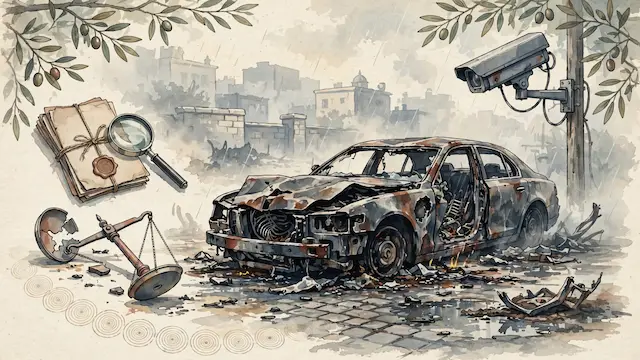
Nearly 18 years after the assassination of crime boss Yaakov Alfrone, retired Superintendent Nissim Daudi and attorney Yiniv Segev are revisiting the unsolved case, focusing on Alfrone's final hours and the mystery surrounding how he was killed. Daudi, who was involved in investigations, and Segev, who was close to Alfrone, offer their perspectives on the events. Daudi recalls the shock within the crime world and police when Alfrone was identified as the victim of a car bombing. Despite his prominent position and numerous conflicts with powerful crime organizations like those of Abergil and Ouchana, Alfrone, who had been active in organized crime for decades, was known to operate without bodyguards, relying on his perceived strength and charisma. Segev confirms Alfrone's lack of constant security, attributing it to his belief that he didn't have an open conflict that would necessitate it, even after previous incidents like a bomb found under his car and a grenade thrown at his home.
Alfrone is described as the dominant figure in his family, possessing a unique blend of charisma, intelligence, and leadership. The Alfrone name itself had become a brand in the underworld. The assassination method, a sophisticated magnetic car bomb, was unusual for the time and required specialized knowledge, highlighting the evolving tactics in Israeli organized crime. Investigators identified a motorcycle following Alfrone's vehicle, but the bomb's attachment was not directly witnessed. The case, initially handled by the Tel Aviv District Crime Unit, was later transferred, but ultimately, no perpetrators or masterminds were brought to justice. Daudi notes that while intelligence often indicates brewing conflicts, it rarely provides specific details about impending attacks, making it difficult to prevent them.
Segev recounts how his plans to be with Alfrone on the day of the murder were changed by an urgent call to represent two associates arrested for a robbery, a twist of fate he believes saved his life. He also reflects on Alfrone's influence on his legal career, emphasizing his client's meticulous approach to legal strategy and his strong family values. Despite his fearsome reputation, Segev remembers Alfrone as a gentleman who rarely raised his voice and deeply cherished his family. The unsolved nature of the case, common in organized crime due to professional perpetrators and a code of silence, underscores the gap between police intelligence and prosecutable evidence. Daudi suggests that while many cases remain unsolved, there's always a possibility of future breakthroughs, as investigation rules are unpredictable.