
Israeli Military Acknowledges Intelligence Gaps Post-October 7
Translated & summarized from Al-Shams by baba
The Israeli military is implementing reforms to address intelligence failures exposed by the October 7th attacks, according to a Walla report. Fragmented data sharing and excessive time spent on information gathering have been identified as critical issues. Major General Nadav Lotan is leading an initiative to integrate AI systems to streamline data analysis and decision-making for commanders.
The story in 5 lines · by baba
- Israeli military intelligence is fragmented, hindering effective decision-making, according to a Walla report.
- Battalion commanders spend 70% of mission prep time gathering and analyzing disparate information.
- Major General Nadav Lotan is leading AI integration to speed up battlefield data processing.
- The military acknowledges failures from October 7th and is conducting in-depth investigations.
- Reforms aim to improve information sharing and reduce decision-making time for commanders.
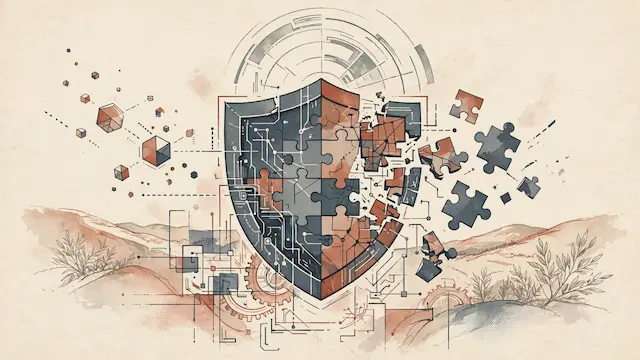
A report by Israel's Walla news site reveals significant intelligence and operational shortcomings within the Israeli military, stemming from the October 7th attacks. Despite possessing extensive surveillance systems along the border, including drones, radar, and advanced monitoring tools, the collected data is fragmented across various units, hindering seamless information sharing. This fragmentation forces battalion commanders to spend approximately 70% of their mission preparation time gathering and analyzing disparate information, leaving only 30% for actual planning and decision-making.
In response to these identified failures, the Commander of the Ground Forces, Major General Nadav Lotan, is spearheading a reform initiative. This reform involves integrating advanced artificial intelligence systems with operational databases. AI algorithms will be employed to rapidly process and sort information, with specialized teams preparing concise outputs for commanders during both mission planning and active combat. The goal is to provide a more accurate battlefield picture and significantly reduce decision-making times.
A senior Ground Forces officer acknowledged the military's "failure" and its ongoing "in-depth investigations" into the details of the October 7th events. He emphasized the military's commitment to learning, improving, and continuously enhancing its capabilities, aiming to shorten combat durations and increase precision. The officer also highlighted the importance of comprehensive area clearance to avoid repeated operations, which he stated waste time, endanger forces, and erode the legitimacy of combat.
These changes underscore a key lesson learned from the October 7th failures and subsequent ground operations: possessing vast amounts of information is insufficient without effective integration, analysis, and timely delivery of that data to field commanders to enable effective decision-making.