
West Bank Municipal Leaders Seek Economic Independence Amid European Boycotts
Translated & summarized from Kipa by baba
Local government leaders in Judea and Samaria are pushing for economic independence in response to European boycotts. They met with the Director General of the Ministry of Interior to present challenges and demand government investment in growth engines and employment zones. The leaders aim to reduce reliance on state budgets and counter trade restrictions by fostering stable income sources. The initiative seeks to strengthen the region's economic self-sufficiency and improve services for residents.
The story in 5 lines · by baba
- West Bank municipal leaders are seeking economic independence to counter European boycotts and sanctions.
- They are demanding government investment in growth engines and employment zones to boost the region's economy.
- The leaders aim to create stable income sources and reduce dependence on state budgets.
- Boycotts and trade restrictions are seen as impediments to business, investment, and local revenue.
- The Ministry of Interior supports strengthening the economic independence of local authorities in the region.
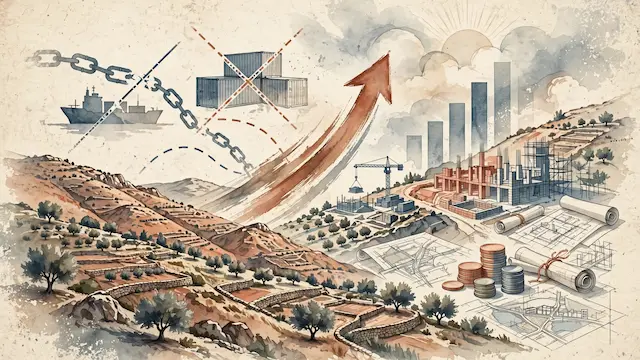
Local government leaders in Judea and Samaria are initiating a strategic move to bolster the region's economic self-sufficiency in response to economic boycotts and sanctions imposed by European countries. During a professional tour in Ma'ale Adumim, attended by Israel Ozen, the Director General of the Ministry of Interior, the leaders presented their economic challenges and urged the government to foster long-term growth engines.
The officials highlighted that trade restrictions and boycotts on businesses and products originating from Judea and Samaria could impede business operations, investments, and exports, while also negatively impacting the municipalities' own revenue, including from business property taxes. Consequently, the leaders are advocating for the establishment of employment and commercial zones to create stable income sources, thereby reducing reliance on state budgets.
Or Piron Zomer, Chairwoman of the Judea and Samaria Municipal Association and Head of the Oranit Local Council, stated that the municipalities aim to counter the boycotts through economic empowerment. "Our response to the boycott and economic isolation attempts from Europe is economic empowerment in the Judea and Samaria region, despite all obstacles," she declared. She added that the leaders presented a joint demand to the Director General of the Ministry of Interior for "immediate investment in growth engines and employment zones that will make Judea and Samaria an independent, strong, and self-reliant area."
The tour included visits to Ma'ale Adumim, with Mayor Guy Yifrach and Judea and Samaria Association CEO Keren Gefen, and to Kidar Farm, with Gush Etzion Council Head Yaron Rosenthal. Other participating leaders represented the local councils of Dead Sea, Shomron, Beit Aryeh, and Beit El.
Yifrach noted the expansion of the Misgav Adumim industrial zone, where marketing for approximately 60 new factories is nearing completion, adding to the existing 450. He appealed to the government to acknowledge the unique economic challenges faced by the Judea and Samaria municipalities and to invest in growth drivers that will enhance their economic independence, particularly in light of boycott threats.
Director General Israel Ozen affirmed that strengthening the economic independence of local authorities is a primary objective for his ministry. "The authorities in Judea and Samaria face unique challenges, and we must work together to expand economic development opportunities, promote employment zones, and generate stable income sources," he stated. He believes that empowering these municipalities will enable them to provide better services to residents and ensure sustained growth.
Mentioned
The same event, reported separately by each outlet. Open a few to compare what different newsrooms emphasize — and what they leave out.
Right 2

Not the same event — other stories that share this one’s people, places, or theme: background, reactions, and follow-ups.
