Mosquitoes Infected With West Nile Virus Found in Northern and Central Israel
Translated & summarized from Israel Hayom by baba
Mosquitoes infected with the West Nile virus were trapped in northern and central Israel, prompting the Ministry of Environmental Protection to order local authorities to intensify pest control measures. Infected mosquitoes were found in Yocneam, Megiddo, Ramat HaSharon, Modi'in-Maccabim-Re'ut, and Kochav Yair-Tzur Yigal. The ministry is urging the public to eliminate standing water, use repellents, and report mosquito problems to local authorities, as the risk increases annually between June and November.
The story in 6 lines · by baba
- Mosquitoes infected with West Nile virus were trapped in northern and central Israel.
- The Ministry of Environmental Protection ordered local authorities to expand prevention and extermination efforts.
- Infected mosquitoes were found in Yocneam, Megiddo, Ramat HaSharon, Modi'in-Maccabim-Re'ut, and Kochav Yair-Tzur Yigal.
- The public is advised to eliminate standing water and report mosquito nuisances.
- Increased risk of West Nile virus-carrying mosquitoes is expected from June to November.
- Dr. Shay Reichler urged public cooperation in combating mosquito-borne diseases.
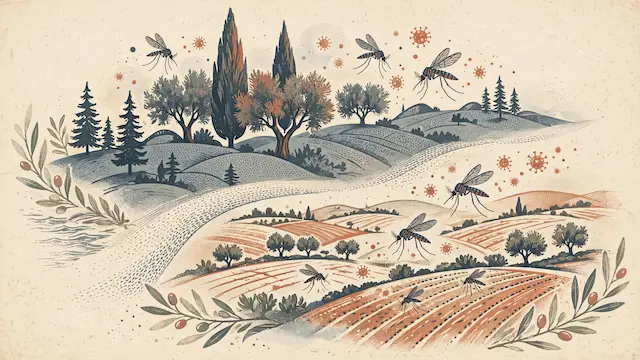
The Ministry of Environmental Protection announced on Friday that mosquitoes infected with the West Nile virus have been trapped in northern and central Israel. Following these findings, the ministry has instructed all local authorities, particularly those where the infected mosquitoes were found, to expand prevention, monitoring, public awareness, and extermination efforts. The goal is to reduce the risk of the spread of these mosquitoes and protect public health.
Dr. Shay Reichler, Director of the Pest and Extermination Department at the Ministry of Environmental Protection, stated that recent mosquito trapping across the country revealed infected mosquitoes in several local authorities in the north and center. He added that the ministry has provided detailed professional guidelines to these authorities for necessary actions to manage mosquito nuisances and mitigate public health risks. Reichler also encouraged the public to eliminate standing water near their homes and report mosquito problems to their local authorities, in addition to the ministry's and local authorities' ongoing monitoring and extermination activities.
During routine year-round monitoring, with a focus on the mosquito season, infected mosquitoes were trapped in the north (Yocneam and Megiddo Regional Council) and in the center (Ramat HaSharon, Modi'in-Maccabim-Re'ut, and Kochav Yair-Tzur Yigal Local Council). These mosquitoes were confirmed by Ministry of Health laboratories to be carriers of the West Nile virus. The ministry emphasized that the responsibility for removing public nuisances caused by disease-carrying pests in public areas lies with the local authorities.
The public is urged to assist by drying and draining standing water sources like buckets, plant saucers, old tires, gutters, decorative pools, and barrels. They are also advised to use mosquito repellent containing DEET or other Ministry of Health-approved active ingredients, install screens on windows, wear long, light-colored clothing, especially during peak mosquito hours, use fans, and report mosquito nuisances or standing water in public areas to the local authority's hotline (106).
As is customary each year from June to November, an increase in the prevalence of mosquitoes carrying the West Nile virus is expected. The Ministry of Environmental Protection's pest control team conducts thousands of larval monitoring tests and hundreds of adult mosquito trapping operations annually. Mosquitoes are sent to Ministry of Health labs for identification and testing. Several trapping incidents where the virus was found have been reported since the beginning of the year. The ministry highlighted that public reporting to local authorities is crucial for effectively targeting monitoring and extermination efforts.
Mentioned