
Iran Defies US, Vows to Continue Uranium Enrichment
Translated & summarized from 0404 by baba
This stance highlights a significant gap between US objectives for a nuclear-free Iran and Iran's insistence on maintaining its program as a sovereign right. While dialogue continues, particularly concerning the Strait of Hormuz, the nuclear issue remains a major obstacle. Israel is closely monitoring the situation, concerned about Iran's nuclear advancements and the effectiveness of any potential agreement.
The story in 7 lines · by baba
- Iran will not abandon uranium enrichment or its stockpiles despite international pressure, according to Mohammad Eslami.
- The US demands significant restrictions on Iran's nuclear activities as part of efforts to end the war.
- Iran views uranium enrichment as a sovereign right and a fundamental part of its technological infrastructure.
- The US considers curbing Iran's enrichment capacity a central component of any future agreement.
- Israel is closely monitoring the situation due to concerns over Iran's nuclear program.
- Discussions between the US and Iran also involve reopening the Strait of Hormuz.
- US President Donald Trump stated that beneficial talks are underway with Iran.
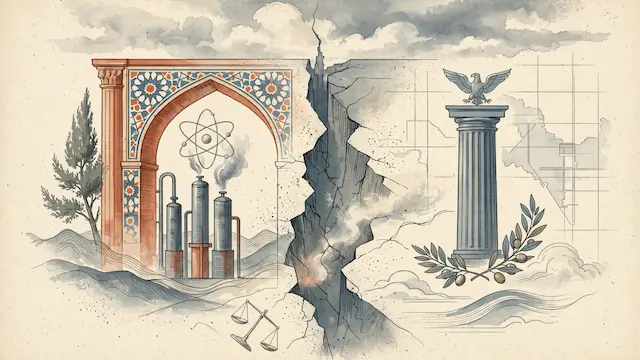
Iran has stated that it will not abandon its uranium enrichment capabilities despite international political and military pressure. This assertion comes as the United States seeks to broker an end to the ongoing war, with a key demand being significant restrictions on Iran's nuclear activities.
Eslami's statement highlights the deep rift between Iran and the US, particularly concerning the future of uranium enrichment and international oversight. For the US administration, curbing Iran's enrichment capacity is central to any future agreement. Conversely, Iran views enrichment as a sovereign right and a fundamental part of its scientific and technological infrastructure, refusing demands that would entail abandoning this capability. Eslami downplayed the significance of potential US strikes on nuclear facilities, stating that such threats do not represent a new development and do not alter Iran's fundamental stance.
He emphasized that uranium enrichment is a basic component of the nuclear industry, essential for its operation. This declaration follows a US demand for Iran to substantially reduce its enrichment capabilities, especially the production of highly enriched material. Washington considers this a crucial test of Iran's willingness to reach a long-term agreement limiting its nuclear potential. Tehran's public rejection of these demands raises doubts about the possibility of reaching consensus within the current diplomatic framework.
Israel is closely monitoring these developments due to concerns about Iran's nuclear program and its potential to rebuild damaged capabilities. Prime Minister Benjamin Netanyahu has consistently stressed the need to prevent Iran from acquiring nuclear weapons, identifying its nuclear program as a primary security threat to Israel. The issue of uranium stockpiles and the ability to resume enrichment remains critical for any future deal.
Prior to the 2025 attacks on Iranian nuclear facilities, Iran enriched uranium to 60%, significantly above the level needed for most civilian reactors and technologically close to the approximately 90% enrichment required for nuclear weapons. However, the article notes that high-level enrichment does not definitively prove an active nuclear weapons program, and Iran denies pursuing such weapons. These statements emerge as the US and Iran continue to exchange proposals aimed at ending the war, with discussions also focusing on reopening the Strait of Hormuz.
Iranian Foreign Minister Abbas Araghchi indicated that Iran is reviewing the US response to its proposals, with a further reply expected soon. US President Donald Trump stated that beneficial talks are underway and that he would not order further strikes before the November 3 midterm elections. Despite ongoing dialogue, a consensus to overcome the core disputes has not yet been reached. The gap between US demands and Iran's public statements presents a significant obstacle to an agreement, with the US seeking assurances against military nuclear advancement and Iran aiming to preserve its technological infrastructure and enriched material stockpiles. The complexity is further increased by questions of international oversight and the assessment of damaged facilities.
For Israel, any future agreement will be evaluated by its practical ability to limit the Iranian nuclear threat, not just by its written commitments. The primary concern is an agreement that fails to ensure adequate oversight of existing nuclear material or prevent the resumption of enrichment capabilities. Consequently, the nuclear issue is expected to remain a focal point of security discussions between Jerusalem and Washington, regardless of progress on other matters. Eslami's declaration signals that, publicly at least, Iran is currently unwilling to concede on uranium enrichment capabilities and existing stockpiles. However, public positions may not fully reflect negotiation possibilities, and it remains uncertain if a compromise will be found. The coming days are expected to bring more clarity as message exchanges continue, with the central question being whether the two nations can bridge the nuclear gap or if rigid stances will lead to an impasse.
Mentioned


