
Settlers and Soldiers Disrupt Palestinian Olive Harvest Amid Violence
Translated & summarized from Local Call by baba
Palestinian farmers faced widespread violence and obstruction during the olive harvest season, with settlers and soldiers reportedly involved in 109 incidents between September 27 and October 6. One farmer, Hassan Yasser Al-Bazari, was killed on October 7 near Nablus. The violence has extended into Areas B and A, areas under Palestinian control, where access is usually not restricted. Reports detail attacks, crop theft, and damage to trees, with some farmers now unable to harvest their crops.
The story in 6 lines · by baba
- Palestinian farmers faced widespread violence and obstruction during the olive harvest season.
- 109 violent incidents were reported across 75 Palestinian villages between September 27 and October 6.
- Hassan Yasser Al-Bazari was killed on October 7 while harvesting olives near Nablus.
- Settlers and soldiers reportedly prevented farmers from accessing groves, including in Areas B and A.
- Incidents included attacks, crop theft, property damage, and injuries to farmers and journalists.
- Some villages face significant reductions in olive oil production due to the disruptions.
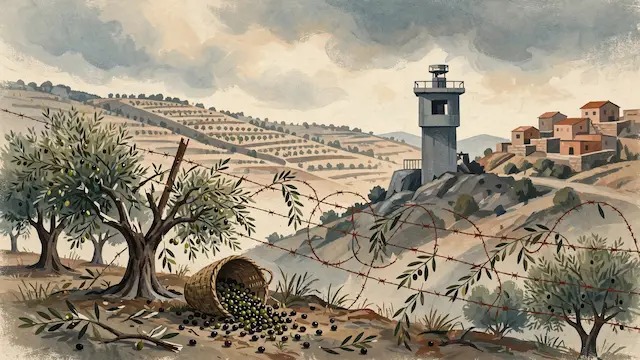
Palestinian farmers are facing widespread disruption and violence during the olive harvest season in the West Bank, with settlers and, in some cases, Israeli soldiers preventing them from accessing their groves. The harvest, which typically begins in early October, has seen farmers rushing to start early due to escalating incidents. According to data from the organization 'Yesh Din,' between September 27 and October 6, there were 109 violent incidents across 75 Palestinian villages. These included 21 attacks on harvesters, 24 instances of harvest prevention by settlers or soldiers, 75 cases of crop theft and property damage, and 22 incidents of damage to olive trees. Soldier presence was documented in at least 28 of these events.
On October 7, Hassan Yasser Al-Bazari, 44, was killed by gunfire while working in fields near Burqa, northwest of Nablus. This marks the first fatality of the season. The article highlights a trend of settlers expanding their activities into Areas B and A of the West Bank, areas under partial or full Palestinian control, where coordination for access is not typically required. In these areas, soldiers and settlers have reportedly prevented farmers from working.
Incidents described include clashes near the village of Beita, south of Nablus, where settlers and security coordinators from the Itamar settlement outpost reportedly fired live ammunition and tear gas, and threw stun grenades. A landowner from the area, Bassam Daoud, recounted being attacked by settlers and soldiers, suffering severe injuries in previous years. Near Rantis, west of Ramallah, farmers attempting to harvest land adjacent to a new outpost were threatened and physically assaulted by settlers.
Further incidents include armed settlers on ATVs chasing harvesters and journalists near Aqrab, injuring a farmer and beating AFP photojournalist Jaafar Ashtiyeh. In Mughayir, settlers were filmed harvesting Palestinian-owned trees under the protection of soldiers, leading to a significant reduction in the village's olive oil production. In Rantis, farmers who once cultivated tens of thousands of dunams now have access to only a fraction of their land due to settler encroachment, with one retiree, Tayseer Al-Sheikh, stating he relies on solidarity activists for protection.
The article also details an incident near Burqa where settlers, some armed, allegedly opened fire, killing Al-Bazari and wounding seven others when farmers attempted to defend their land. The IDF stated that in a separate incident in Aqrab, settlers responded to the presence of Palestinians, and one settler fired his weapon, reportedly injuring two Palestinians. The IDF stated they dispersed a gathering and that a reported injury to a media worker was not confirmed.
Mentioned