
US Military Ordered to Prepare for Renewed Conflict with Iran
Translated & summarized from Mako by baba
The U.S. military's Central Command has been ordered to prepare for a potential renewal of large-scale combat operations against Iran, though President Trump has not yet made a final decision. U.S. and Israeli sources suggest this could happen before upcoming U.S. midterm and Israeli elections, potentially impacting oil prices and Israel's political landscape. If hostilities resume, they are expected to involve significant strikes on Iranian energy, infrastructure, and nuclear sites, possibly with Israeli participation.
The story in 7 lines · by baba
- The U.S. military's Central Command has been ordered to finalize preparations for renewed large-scale combat operations against Iran.
- President Trump has not yet made a final decision on whether to resume hostilities with Iran.
- Sources suggest a potential conflict could occur before the U.S. midterm elections and Israel's elections.
- Renewed operations could involve extensive bombing of Iran's energy, infrastructure, and nuclear targets.
- A conflict could significantly impact U.S. oil prices and Israel's upcoming elections.
- The U.S. and Israel might coordinate strikes if hostilities resume.
- Senior Israeli officials believe the Iranian regime is desperate and could initiate an attack.
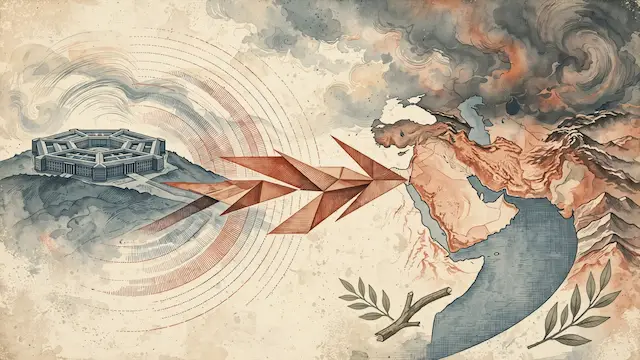
The Pentagon has instructed the U.S. military's Central Command to finalize preparations for a potential resumption of large-scale combat operations against Iran. While no specific date for an attack was given, and President Trump has not made a final decision, U.S. and Israeli sources suggest this could occur before the U.S. midterm elections, and possibly even before Israel's elections, which are scheduled for a week earlier. If hostilities resume, they are expected to involve extensive bombing of Iran's energy, infrastructure, and nuclear targets.
A renewed conflict in the next three to four weeks could significantly impact the U.S. midterm elections, primarily by potentially causing a further surge in oil prices. The escalation could also have a substantial effect on Israel's elections, as Iran might retaliate by launching ballistic missiles toward Israel. Such a scenario, or even a prolonged period of high tension and emergency, could politically benefit Prime Minister Netanyahu and hinder his opponents in the final stretch of the election campaign. In an extreme case, a renewed conflict might even lead to the postponement of the elections.
An American defense official stated that the Department of Defense's role is to develop and present military options to the President. A White House official emphasized that all options remain available to President Trump, asserting that the U.S. is in a strong position with control over the Strait of Hormuz and a collapsing Iranian economy. The official added that Iran has been severely impacted and the situation will unfold either "the easy way or the hard way," with President Trump holding all the cards.
President Trump's senior national security team convened at Camp David recently to discuss, among other matters, the conflict with Iran. A senior Israeli official indicated that part of the meeting focused on the possibility of renewing extensive combat operations against Iran. Following the meeting, Secretary of State Marco Rubio commented that it focused on long-term foreign policy planning.
A senior Israeli official noted that discussions about renewing extensive operations against Iran have gained momentum, with the chances of it happening before the elections being low but not ruled out. The likelihood increases significantly after the U.S. midterm elections. President Trump spoke with Israeli Prime Minister Benjamin Netanyahu recently, their second conversation in a week, after a period of infrequent communication. A U.S. official stated the call concerned the anniversary of the October 7th massacre. This call followed a meeting where Netanyahu convened his national security team to discuss Iran, according to an Israeli official.
Should large-scale combat operations against Iran resume, they would likely be coordinated between the U.S. and Israel, with the IDF participating in the strikes. Two senior Israeli officials suggested that the Iranian regime is currently in a state of desperation and paranoia, which could prompt them to take the initiative and attack first, feeling they cannot afford a third surprise after two previous ones.
Mentioned
The same event, reported separately by each outlet. Open a few to compare what different newsrooms emphasize — and what they leave out.
Only Mako so far.
