Global Media Coverage of October 7 Anniversary Highlights Divergent Narratives
Translated & summarized from Hamal by baba
International media coverage of the third anniversary of the October 7 massacre showed a significant divide, with some outlets focusing on Israeli victims and others criticizing Israel's actions in Gaza. Australian and British media highlighted Israeli trauma and survivor stories, while Spanish, Qatari, and French outlets focused on Palestinian suffering and accused Israel of genocide and ethnic cleansing. Agencies like Reuters and The New York Times presented both Israeli commemorations and the devastation in Gaza.
The story in 5 lines · by baba
- Global media coverage of the October 7 anniversary revealed starkly divided narratives on the events and their aftermath.
- Some outlets focused on Israeli trauma and survivors, while others criticized Israel's actions in Gaza.
- Spanish, Qatari, and French media used terms like "genocide" and "ethnic cleansing" in their coverage.
- Australian and British media highlighted Israeli survivor stories and memorial events.
- Reuters and The New York Times presented both Israeli commemorations and the devastation in Gaza.
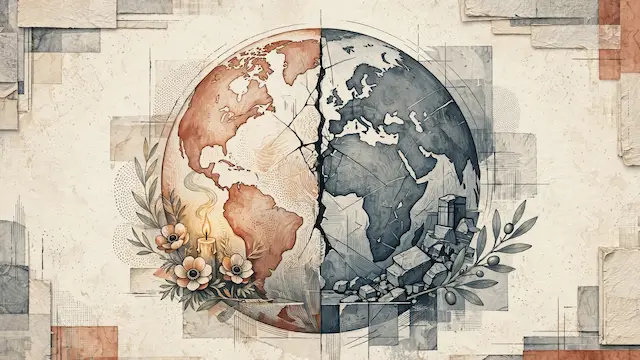
Three years after the October 7 massacre, international media coverage of the anniversary presented a starkly divided perspective on the events and their aftermath. While some outlets focused on the Israeli trauma, commemorating victims and celebrating the return of hostages, others used the occasion to criticize Israel's actions in Gaza, employing terms like "genocide," "ethnic cleansing," and "dehumanization of Palestinians."
Australian broadcaster ABC dedicated significant coverage to Israelis whose lives were altered by the October 7 attacks, featuring interviews with survivors and reporting on memorial events in Sydney. The Guardian in the UK published an in-depth report on the ongoing trauma of massacre and hostage survivors, including the story of Keith Siegel, who described living a "double life" haunted by his 484 days in Hamas captivity. The report also touched on the dilemma of rebuilding Kibbutz Nir Oz while preserving evidence of the massacre.
Conversely, some media outlets shifted the focus from the October 7 events to the war in Gaza and offered sharp criticism of Israel. Spain's El País suggested that the Hamas attack accelerated a two-decade trend within Israeli society towards the right, religious observance, dehumanization of Palestinians, and normalization of genocidal rhetoric. The article also claimed that Prime Minister Netanyahu fostered Hamas's rule to divide Palestinians and weaken the Palestinian Authority, and that he offered "revenge" instead of an inquiry.
Al Jazeera's coverage was even more pointed, with a prominent article titled "Three Years of Israel's Genocide in Gaza: By the Numbers." The piece focused on Palestinian casualties, displacement, and destruction in Gaza, framing the war as an ongoing "genocide" initiated by Israel, with the October 7 attack mentioned only as a backdrop. France's Le Monde linked the October 7 trauma to Israel's subsequent policies, arguing the government exploited it to promote actions leading to widespread destruction in Gaza and international isolation, while also criticizing the rise of the far-right and calls for ethnic cleansing.
Other outlets, such as Reuters and The New York Times, attempted to present both narratives side-by-side. Reuters' headline read, "Israelis mark three years since Oct. 7, as Palestinians mourn Gaza's devastation," juxtaposing Israeli memorial ceremonies with the reality of life among the ruins in Gaza. The New York Times similarly featured separate articles on Israeli hostage survivors' struggles and the current conditions in Gaza.
Mentioned
The same event, reported separately by each outlet. Open a few to compare what different newsrooms emphasize — and what they leave out.
Centre 1Right 1

Not the same event — other stories that share this one’s people, places, or theme: background, reactions, and follow-ups.