Teenager Critically Injured in Northern Israel Electric Scooter Accident
Translated & summarized from Kipa by baba
A 14-year-old boy sustained a critical head injury after falling from an electric scooter in Rummat al-Hayb, northern Israel. Magen David Adom paramedics treated him at the scene before transporting him to Rambam Hospital. The teen was conscious and in stable, critical condition following the incident on Tuesday afternoon. The accident highlights the risks associated with electric scooter use.
The story in 5 lines · by baba
- A 14-year-old boy was critically injured in an electric scooter accident in Rummat al-Hayb.
- The incident occurred on Tuesday afternoon, prompting an MDA response.
- The teen suffered a severe head injury and was hospitalized at Rambam.
- Paramedics provided immediate medical treatment at the scene.
- The boy was conscious and in stable, critical condition upon transport.
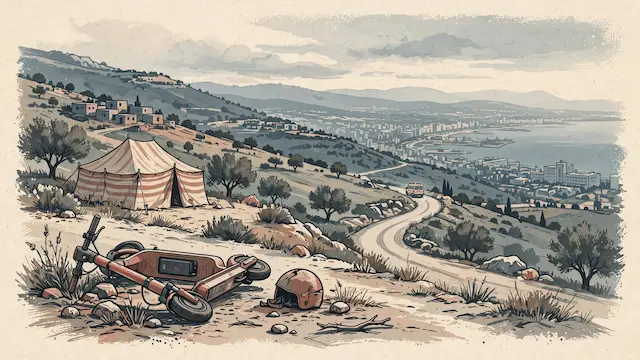
A 14-year-old boy was seriously injured after falling from an electric scooter while riding in Rummat al-Hayb, northern Israel. The incident occurred around 2:45 PM on Tuesday when Magen David Adom (MDA) received a report of the accident. MDA paramedics provided medical treatment at the scene, stabilizing the boy who had sustained a severe head injury. He was then transported by a mobile intensive care unit to Rambam Hospital in critical but stable condition, fully conscious.
"When we arrived at the scene, we were led to the youth who was lying on the road after being injured during a ride," said the Senior MDA medic, a senior MDA medic. "We provided him with medical treatment, including stopping bleeding and administering medication, and evacuated him in an MDA intensive care vehicle to the hospital with his condition serious and stable, and he was fully conscious."
The same event, reported separately by each outlet. Open a few to compare what different newsrooms emphasize — and what they leave out.
Centre 2Right 1Arab 2Other 1






Not the same event — other stories that share this one’s people, places, or theme: background, reactions, and follow-ups.