ZAKA Volunteers Detail Horrors of Oct. 7 Gaza Envelope Massacre
Translated & summarized from Kikar HaShabbat by baba
ZAKA volunteers Itzik Ita and Nachman Shai Revivo described the atrocities they witnessed on October 7th in the Gaza envelope, calling it a "Holocaust in color." They recounted operating under heavy fire in communities like Netiv Ha'asara and at the Nova festival site, collecting numerous bodies and treating severely wounded individuals. The volunteers detailed the extreme cruelty of the terrorists, including executions and deliberate burning of bodies, and stressed their duty to testify against denial.
The story in 6 lines · by baba
- ZAKA volunteers described the October 7th atrocities in the Gaza envelope as a "Holocaust in color."
- Volunteers Itzik Ita and Nachman Shai Revivo recounted operating under heavy fire and collecting numerous bodies.
- They witnessed extreme cruelty, including executions and deliberate burning of victims by terrorists.
- The volunteers worked at the Nova festival site, describing it as a "field of murdered people."
- They emphasized their duty to testify against denial of the events.
- Revivo compared the events to other disasters, calling them unparalleled in their "pure evil."
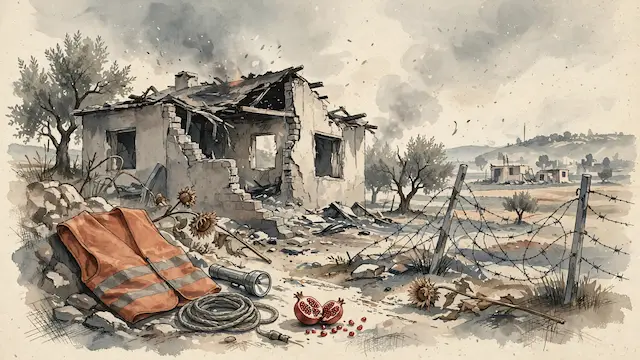
Two ZAKA (National Emergency Response) volunteers, Itzik Ita and Nachman Shai Revivo, have broken their silence to recount the horrific atrocities they witnessed on October 7th in the Gaza envelope communities. Speaking in an interview, they described the events as a "Holocaust in color," aiming to document the reality to prevent denial.
Revivo, an MDA paramedic and ZAKA volunteer, was called to duty early on October 7th. Initially responding to events in Jerusalem, he received a call from a friend in the south around 8 AM, warning of a full-scale war with hundreds of terrorists infiltrating the Gaza envelope. He and a colleague immediately drove south, heading first to Barzilai Medical Center in Ashkelon, where they found dozens of bodies. A YAMAM (special police unit) fighter then directed Revivo to Netiv Ha'asara, where they operated under heavy fire to prevent terrorists from taking bodies.
In Netiv Ha'asara, Revivo described seeing overturned vehicles, abandoned weapons, bodies strewn on the road, and even live terrorists tied to poles. The volunteers worked to collect bodies, loading them onto trailers and driving them back to Ashkelon, under threat from returning Hamas forces. They also recovered the bodies of nine fallen YAMAM fighters.
Ita, a ZAKA commander and Hatzala Without Borders medic, was in Beitar Illit when he was called south around 1 PM. He described the scene on Road 25 as total chaos, with a Yasur helicopter landing nearby to evacuate the wounded. He witnessed horrific close-range gunshot and stabbing wounds, and civilian and security vehicles riddled with bullets. The volunteers worked tirelessly, performing life-saving measures and loading casualties onto helicopters.
Both volunteers later worked at the Nova music festival site near Kibbutz Re'im, which they described as a "field of murdered people." They worked through the night under extreme pressure, with the military setting a deadline of 4 AM for the area to be cleared due to the threat of suicide drones. They described a massive evacuation effort using military and civilian trucks, trailers, and even food company trucks to transport the vast number of bodies.
They also detailed the "satanic cruelty" of the terrorists, describing "execution shots" to the head, bound victims being shot, and bodies deliberately burned with accelerants that melted vehicle rims. Ita confirmed that bodies of children, women, and the elderly were burned. Revivo recounted a particularly difficult moment at the Yad Mordechai junction, where they painstakingly collected the remains of a murdered man from a completely burned-out car for a proper Jewish burial.
Comparing the events to other disasters they had experienced, including the Meron disaster, Revivo stated that October 7th was unparalleled in its "pure evil" and "monstrosity." They emphasized their moral and historical duty to bear witness and tell their story to counter denial, stating, "Israel experienced two Holocausts, the first was in black and white, and we were privileged, or fated, to see the second Holocaust in color."
Mentioned
The same event, reported separately by each outlet. Open a few to compare what different newsrooms emphasize — and what they leave out.
Centre 1Haredi 1

Not the same event — other stories that share this one’s people, places, or theme: background, reactions, and follow-ups.