
Shin Bet Chief Claims Attempts to Form Armed Groups in Negev
Translated & summarized from Arab48 by baba
Shin Bet chief David Zini claims "military structures" and armed groups are forming in Bedouin communities in the Negev, with alleged links to Palestinian organizations like Hamas. This comes amid a surge in unlicensed weapons and crime in Israel's Arab community. Israeli security agencies report increased involvement of Negev Arabs in "security-related" cases and arms smuggling from neighboring borders. Operations are underway to disrupt these nascent armed groups, with familial ties also cited as a potential factor.
The story in 5 lines · by baba
- Shin Bet chief David Zini claims "military structures" and armed groups are forming in Negev Bedouin communities.
- Zini alleges some of these groups have "worrying links" to Palestinian organizations, including Hamas.
- The claims surface amid a significant rise in unlicensed weapons and crime within Israel's Arab community.
- Israeli security agencies report increased involvement of Negev Arabs in "security-related" cases and arms smuggling.
- Operations are ongoing to disrupt the formation of these alleged armed groups in their early stages.
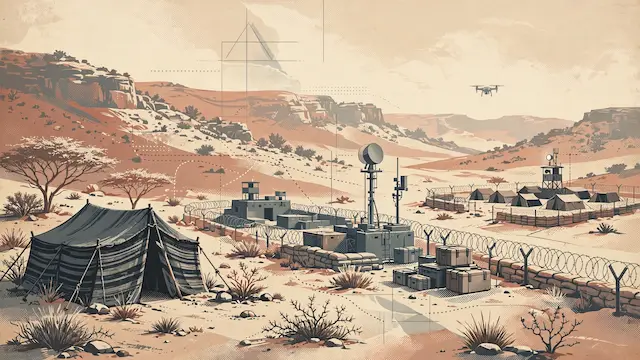
The head of Israel's Shin Bet security agency, David Zini, has claimed the existence of "military structures" and attempts to form paramilitary-style armed groups within Bedouin communities in the Negev desert. He alleged that some of these groups have ties to Palestinian organizations, amid a widening problem of unlicensed weapons and ongoing failure by Israeli authorities to combat crime in the Arab community. Zini made these statements during a meeting of the Israeli Ministerial Committee for Political and Security Affairs (the Cabinet) on Monday, which focused on what Israel describes as security threats in Gaza and the occupied West Bank. "There are places in Bedouin communities where military structures exist and attempts to establish quasi-military battalions, and this is a very worrying phenomenon," Zini stated, adding that the Shin Bet is actively working to thwart such structures. He further claimed these groups have a "worrying link" to organizations including Hamas, though the report provided no detailed information on their size, locations, structure, or the nature of the alleged ties. Israeli security agencies have reportedly observed an increase in the involvement of Arab citizens from the Negev in cases classified as "security-related" over the past two years, alongside arms smuggling from the Egyptian and Jordanian borders and links to entities in the West Bank and Gaza. Security forces attribute this trend to the widespread proliferation of unlicensed weapons in the Negev, with smuggled arms including assault rifles and explosives. Israeli security agencies also claim a "blurring of lines" between criminal activity and "nationalistic motives" in some cases, suggesting groups that began with organized crime and extortion later became radicalized and attempted to use weapons for attacks. Content disseminated by Hamas and ISIS on social media is also said to influence some young men to form local groups and emulate armed formations in the West Bank. The Shin Bet, police, and IDF are conducting operations, including nighttime arrests and weapons seizures, to disrupt the formation of armed groups in their early stages. The report also noted familial ties and marriages between Palestinians in the Negev and women from Gaza and the West Bank, suggesting these relationships could be linked to security or military activity. In this context, the case of Sabah Haniyeh, sister of former Hamas political bureau chief Ismail Haniyeh, was mentioned. She is on trial for allegedly sending messages to relatives after the October 7, 2023, attack. Zini's claims emerge amid a broader crisis of organized crime and weapons proliferation in the Arab community, which Arab leaders and civil society organizations have long blamed on the Israeli government and police for failing to enforce the law and dismantle criminal networks. A prosecutor in the Southern District noted in June that increased weapons seizures are directly linked to the rising volume of unlicensed weapons, many entering the country on foot or via drones. The increased supply has also lowered prices for some firearms, with drones being used to smuggle heavier weaponry. The severity of the issue has led the Shin Bet to intervene in some arms smuggling investigations, classifying border breaches and large arms inflows as having security dimensions, even if charges are not always security-related.
Mentioned
The same event, reported separately by each outlet. Open a few to compare what different newsrooms emphasize — and what they leave out.
Centre 3Right 3Haredi 2Arab 4Other 3

















Not the same event — other stories that share this one’s people, places, or theme: background, reactions, and follow-ups.